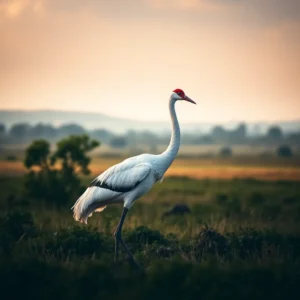
The common crane is one of Europe’s most iconic migratory birds, performing spectacular mass migrations between Scandinavian and Siberian breeding grounds and wintering sites in Spain, North Africa, and the Middle East. These tall, graceful birds are celebrated for elaborate courtship dances involving synchronized leaping, bowing, and wing-spreading that pairs practice together throughout their long pair bond. Cranes are among the oldest bird families — fossil records extend back 60 million years.
About the Crane
Grus grus
Advertisement
⚡ Speed Comparison
📸 Photo Gallery





💡 Fun Facts
01
Cranes perform elaborate courtship dances involving synchronized leaping, bowing, wing-flapping, and trumpet calls that can continue for hours and are maintained throughout a lifetime pair bond.
02
Flying cranes can travel up to 740 km in a single day, aided by soaring on thermal updrafts rather than flapping continuously.
03
Cranes sleep standing on one leg — the resting leg is tucked into the warm breast feathers while the other is locked straight.
04
The crane's haunting trumpeting call can carry over 2 km and is produced by a trachea coiled inside the sternum, acting as a resonating tube.
05
Japanese cranes (tancho) are symbols of longevity and luck in East Asian culture and were believed to live 1,000 years.
📍 Where to Find This Animal
Habitat Types:
Wetlands & Grasslands
🛒 Crane Related Gear
As an Amazon Associate we earn from qualifying purchases.




Join the Conversation
Share your thoughts about the Crane