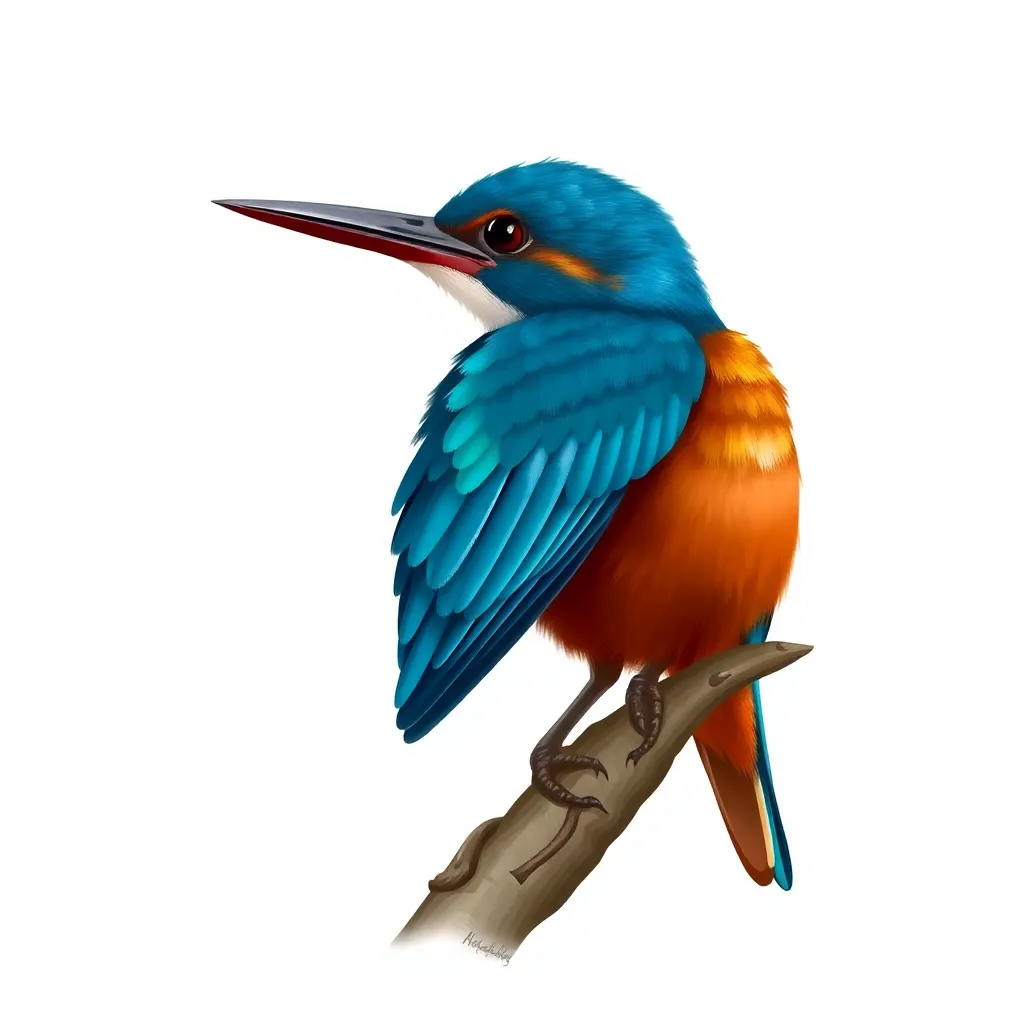
The common kingfisher is one of Europe’s most brilliantly colored birds — a compact dart of electric blue and orange that plunges into streams with extraordinary precision to catch small fish. Despite the brilliance of its plumage, kingfishers can be surprisingly difficult to spot as they perch motionless on overhanging branches scanning the water below. The aerodynamics of the kingfisher’s bill — a gradual taper that minimizes water entry splash — was so efficient it inspired the redesign of the nose of Japan’s Shinkansen bullet train.
About the Kingfisher
Alcedo atthis
Advertisement
⚡ Speed Comparison
📸 Photo Gallery




💡 Fun Facts
01
Kingfisher bills taper gradually from base to tip with a specific geometry that minimizes splash and pressure waves when entering water — this biomimetic design was copied for the Shinkansen bullet train's nose, reducing tunnel boom noise by 30%.
02
Kingfishers can see polarized light and UV wavelengths, allowing them to detect fish below the water surface by reducing the glare and refraction that would confuse normal color vision.
03
They compensate for light refraction at the water surface by mentally correcting their aiming point before diving — effectively solving Snell's Law of optics without any mathematical education.
04
A kingfisher pellet — a compact bundle of fish bones, scales, and other indigestible material — is regurgitated once or twice daily and can be used to scientifically identify the exact species consumed.
05
Both sexes excavate a nest burrow up to 60 cm deep into a steep riverbank using only their bills, taking turns and removing earth with their feet over the course of two to three weeks.
📍 Where to Find This Animal
Habitat Types:
Rivers, Streams & Lakes
🛒 Kingfisher Related Gear
As an Amazon Associate we earn from qualifying purchases.






Join the Conversation
Share your thoughts about the Kingfisher