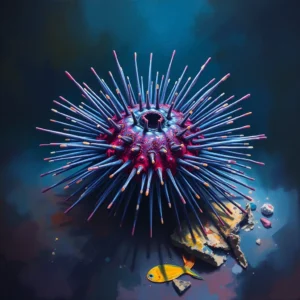
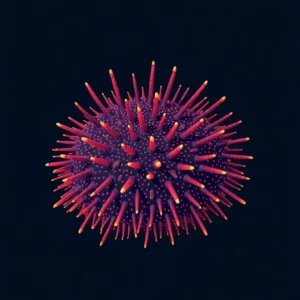
Loading Wildlife…

Strongylocentrotidae LC

THE

SEA URCHIN

Spiny Gardener of the Kelp Forest

Strongylocentrotus purpuratus

Americas
CLASS Echinodermata FAMILY Strongylocentrotidae GENUS Strongylocentrotus
0.2 km/h
Top Speed
⚖️
50-100 g kg
Max Weight
📏
4-10 cm
Body Length
🕰️
20-200 years
Lifespan
🍖
Herbivore
Diet Type

IUCN Red List — Where this species stands

LC Least Concern
NT Near Threatened
VU Vulnerable
EN Endangered
CR Critical
EW Extinct Wild
EX Extinct

About the Sea Urchin

Strongylocentrotus purpuratus

Advertisement

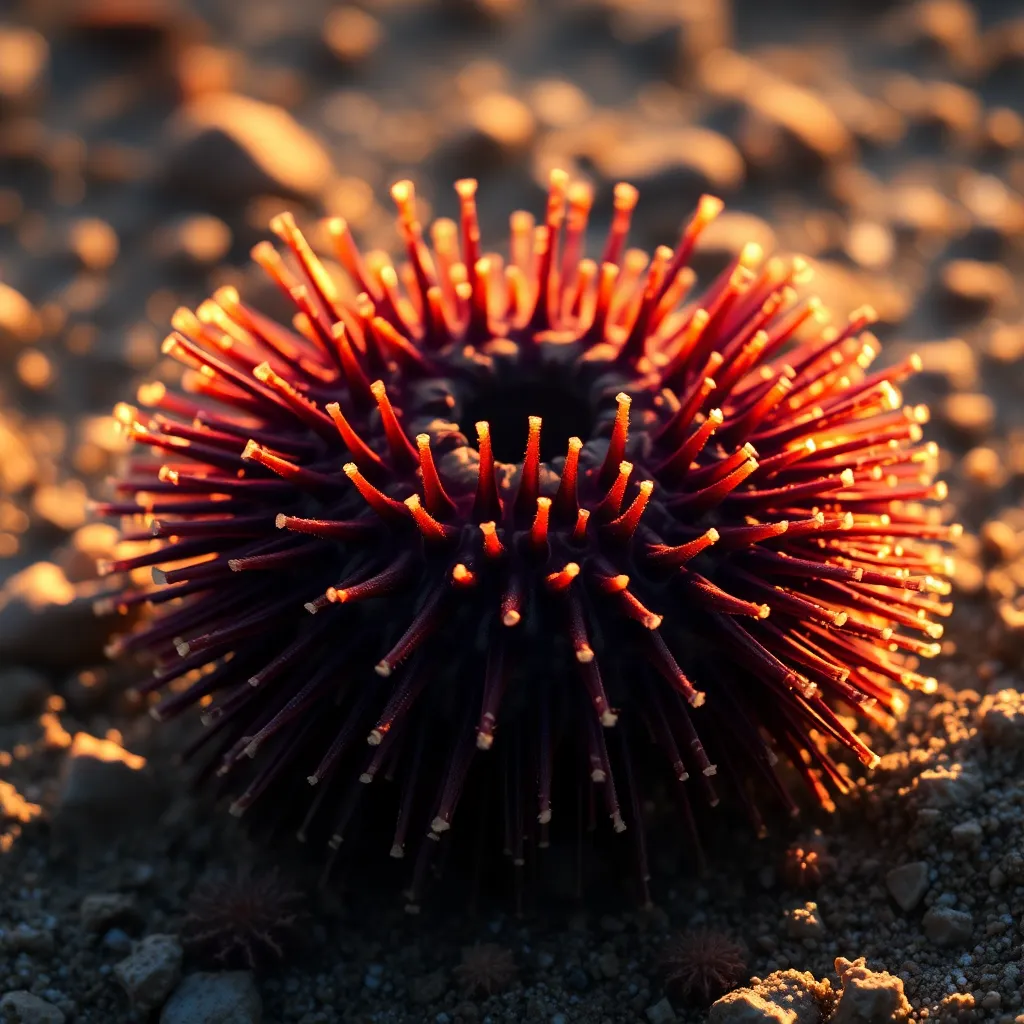
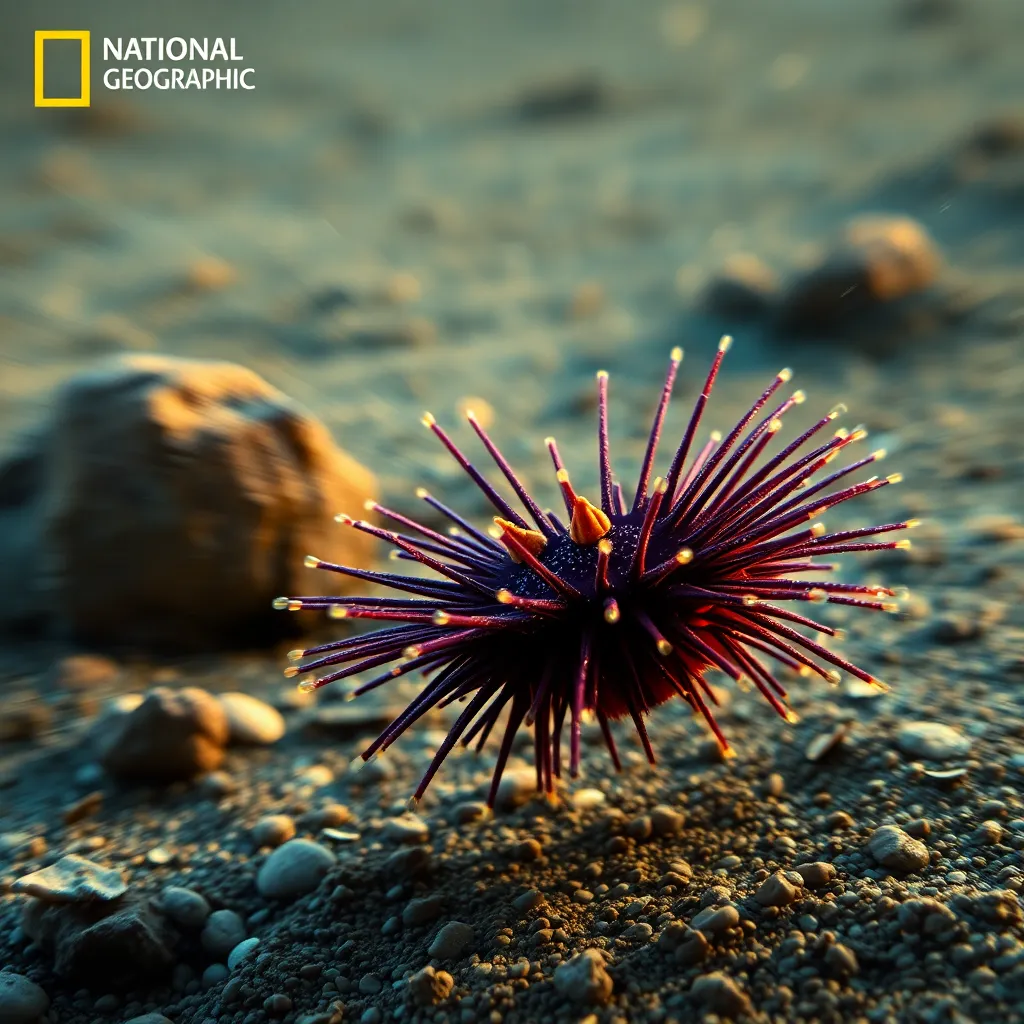
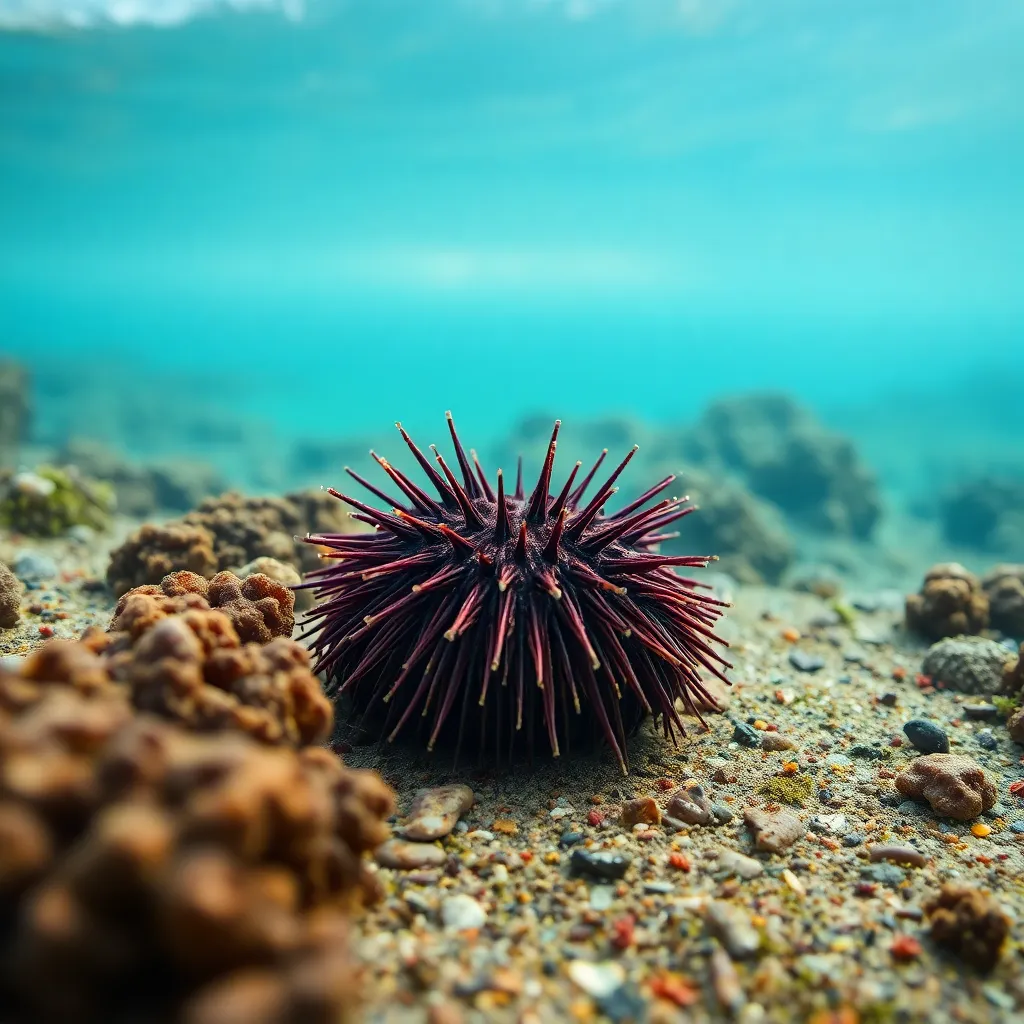
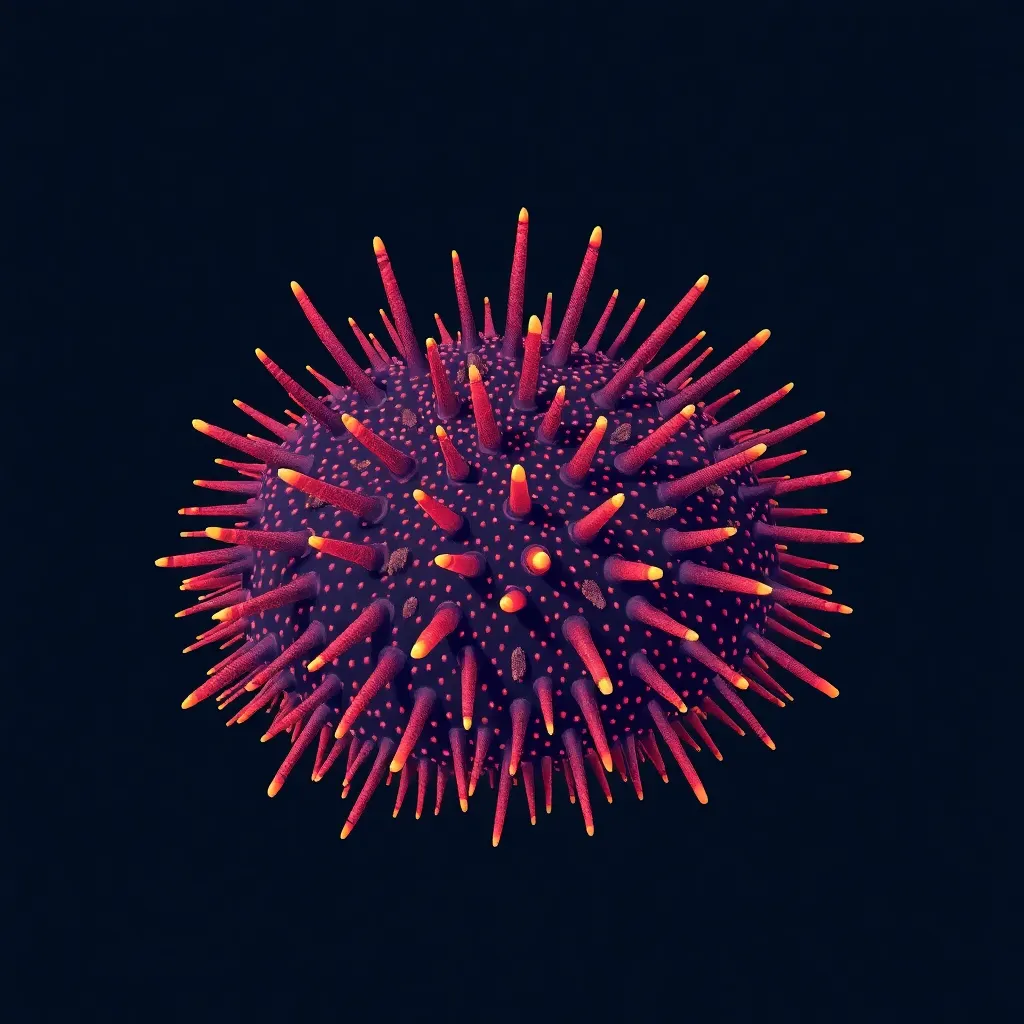
The purple sea urchin is a keystone species of the Pacific kelp forest ecosystem, capable of both maintaining healthy kelp through grazing and, when populations explode unchecked, creating bare ‘urchin barrens’ devoid of all macroalgae. Echinoderms lack a centralized brain; the sea urchin’s nervous system is a radially distributed nerve ring. Some sea urchin species have been found with telomeres that do not shorten with age, sparking significant interest in the biology of aging.

⚡ Speed Comparison

Sea Urchin
0 km/h
Human
12 km/h
Car (city)
50 km/h
Horse
54 km/h

💡 Fun Facts

01

Some species of sea urchin appear to be biologically non-aging — they show no increase in mortality rate with age and some individuals are estimated to be over 200 years old.

02

The purple sea urchin's genome contains more than 23,000 genes — comparable to humans — and includes a sophisticated immune system with 222 distinct immune receptor genes.

03

Sea urchins have no eyes but light-sensitive cells all over their body, and new research suggests their entire body surface functions as a compound eye.

04

Their five-toothed jaw apparatus, called Aristotle's lantern, can grind through solid rock to excavate burrows in areas with strong surge.

05

After a sunflower sea star (their main predator) was driven nearly extinct by sea star wasting disease, purple urchin populations on the US West Coast exploded 10,000-fold by 2019.

Unlock Expert Wildlife Facts

Watch a short 15-second video to unlock detailed expert analysis, exclusive wildlife photography, and rare behavioral facts.

📍 Where to Find This Animal

Habitat Types: Rocky Coastal Ocean

🛒 Sea Urchin Related Gear

As an Amazon Associate we earn from qualifying purchases.
🗨️

Join the Conversation

Share your thoughts about the Sea Urchin

✍️

Leave a Comment

Your email address will not be published. Required fields are marked *

How Big Is a Sea Urchin?

Side-by-side comparison with an adult human (175 cm)

🧍
Human
175 cm
🦔
Sea Urchin
65 cm
shoulder height
50-100 BODY WEIGHT
4-10 BODY LENGTH
0.2 TOP SPEED
20-200 LIFESPAN
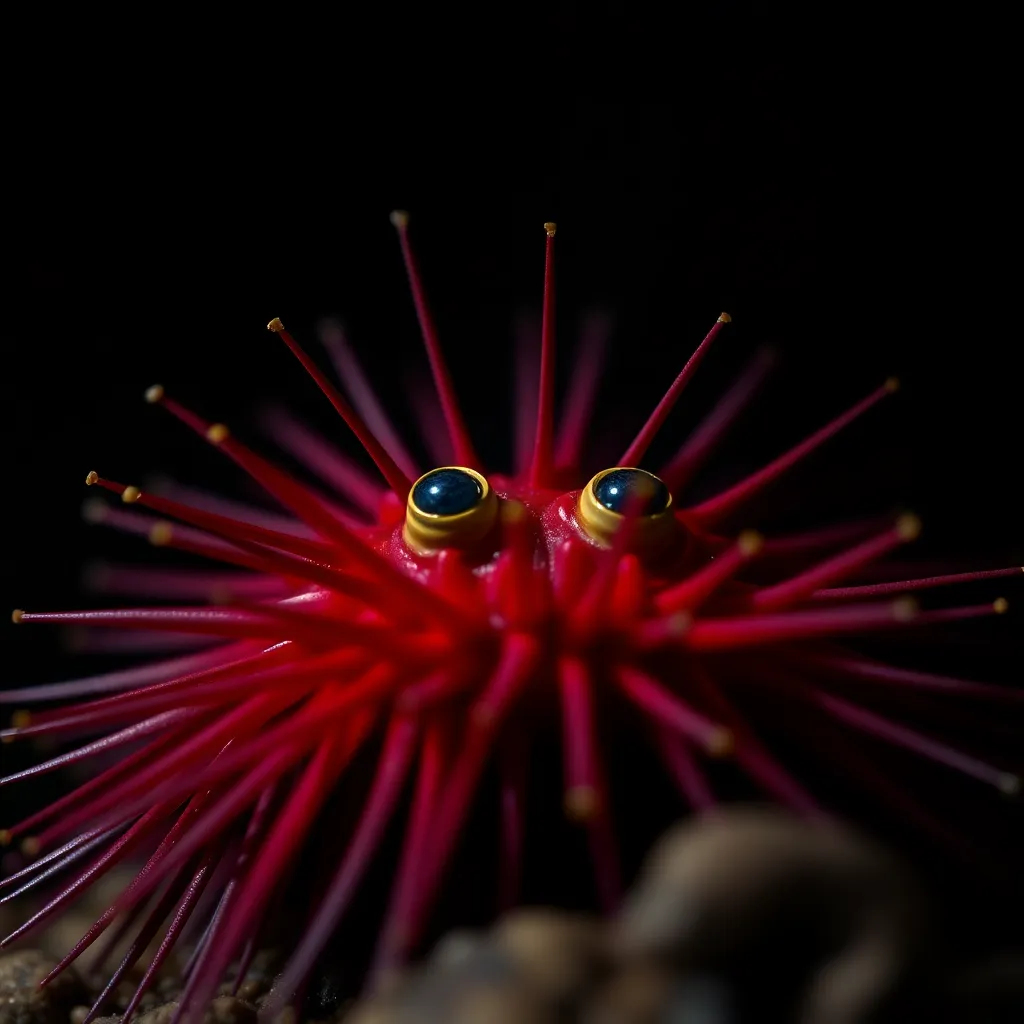
Sea Urchin close-up
Sea Urchin

SURVIVAL TOOLKIT

Built for Survival

Nature's engineering refined over millions of years

🔬 SURVIVAL TOOLKIT
Spine Defense
01

Spine Defense

Long, mobile calcareous spines deter predators and are used for locomotion and to wedge the animal into rock crevices.

Aristotle's Lantern
02

Aristotle's Lantern

A complex five-tooth jaw structure made of calcite can scrape and cut through rock, coral, and dense algae.

Tube Feet
03

Tube Feet

Hundreds of hydraulically operated tube feet with adhesive pads allow slow, precise movement across vertical and inverted surfaces.

Radial Body Plan
04

Radial Body Plan

Five-fold radial symmetry allows the urchin to detect and respond to stimuli from any direction without a forward orientation.

Aging Resistance
05

Aging Resistance

Telomere maintenance mechanisms in some species appear to suppress the cellular aging process associated with declining reproduction.

Spiny Gardener of the Kelp Forest. An extraordinary creature that reminds us what we stand to lose.

Jungal Safari · Wildlife Network
💡

Did You Know?

Some species of sea urchin appear to be biologically non-aging — they show no increase in mortality rate with age and some individuals are estimated to be over 200 years old.

🍖 DIET: HERBIVORE

What Does the Sea Urchin Eat?

🌿
Kelp and Algae
🍂
Organic Detritus
🪸
Encrusting Organisms
🦠
Biofilm and Bacteria
🗺️ GEOGRAPHIC RANGE

Where Do Sea Urchins Live?

🌍
Continents
➡️
Population Trend Stable

Conservation in Action

How You Can Help the Sea Urchin

Small actions, taken together, can reverse the decline of species like this one

🌳
Protect Habitat

Support wildlife reserves and protected land corridors

🚫
Stop Poaching

Report illegal trade and back anti-poaching patrols

🔬
Fund Research

Camera-trap studies and population monitoring

🤝
Community Work

Partner with local herders to reduce conflict

📢
Raise Awareness

Educate and inspire future wildlife champions

"Without urgent action, the Sea Urchin could disappear from the wild within our lifetime."

PROTECT THEM. PRESERVE THEIR LEGACY.

The Sea Urchin's Future
Is In Our Hands

Every share, every donation, every voice raised — makes a difference for wildlife conservation.

🌳Protect Habitat
📢Raise Awareness
💰Fund Research
🤝Community Work
🚫Stop Poaching

"Protect Wildlife. Preserve Our Planet."

Every species matters. Every action counts.

Advertisement