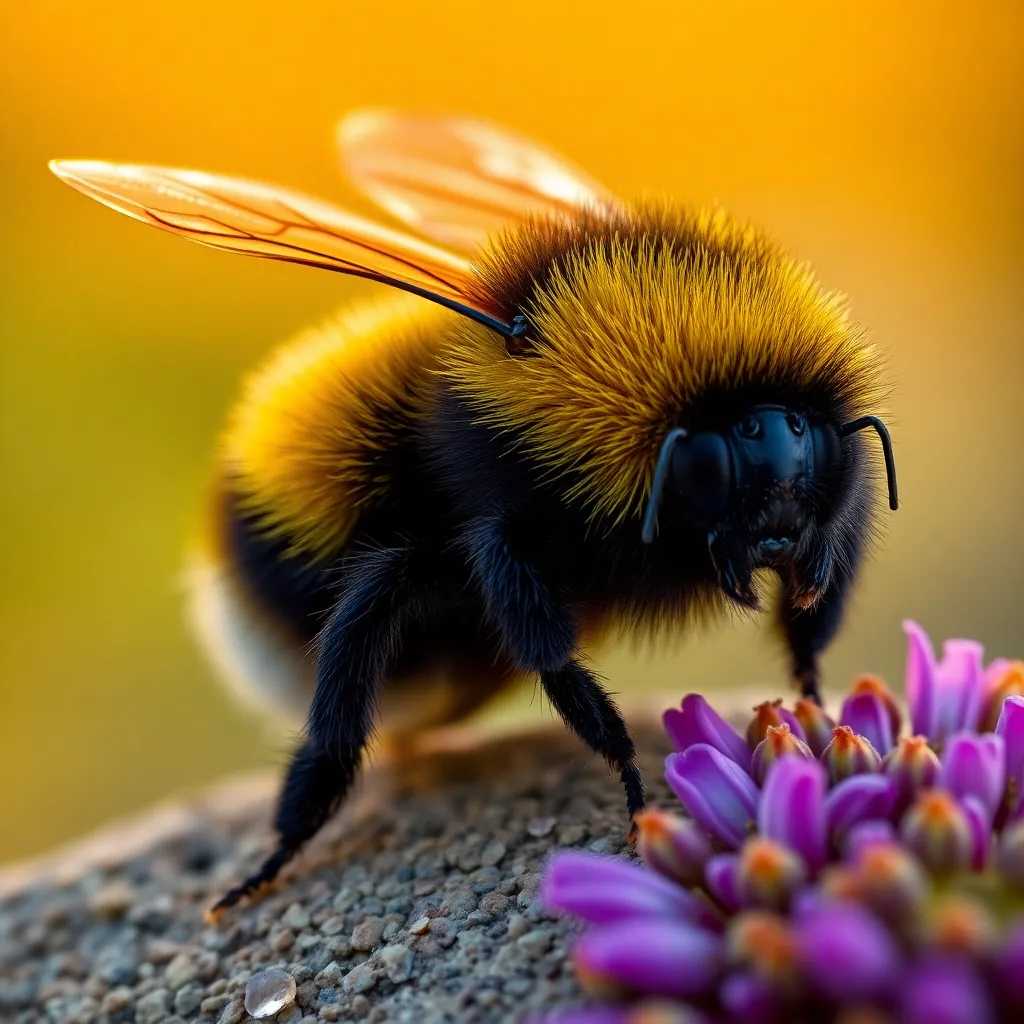
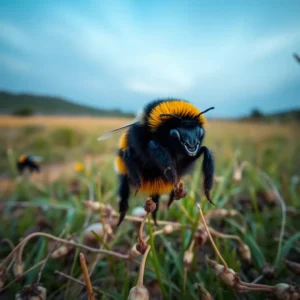
The buff-tailed bumblebee is one of the most ecologically important pollinators in Europe and a key model organism for understanding insect cognition. Unlike honeybees, bumblebee colonies are annual — founded by a single mated queen in spring and dying out in autumn with only new queens surviving to hibernate. Bumblebees are capable of ‘buzz pollination,’ vibrating their flight muscles at a precise frequency to shake pollen from flowers that other insects cannot access.
About the Bumblebee
Bombus terrestris
Advertisement
⚡ Speed Comparison
📸 Photo Gallery


💡 Fun Facts
01
Bumblebees can 'buzz pollinate' by vibrating their flight muscles at 400 Hz — a technique that releases pollen from flowers inaccessible to honeybees.
02
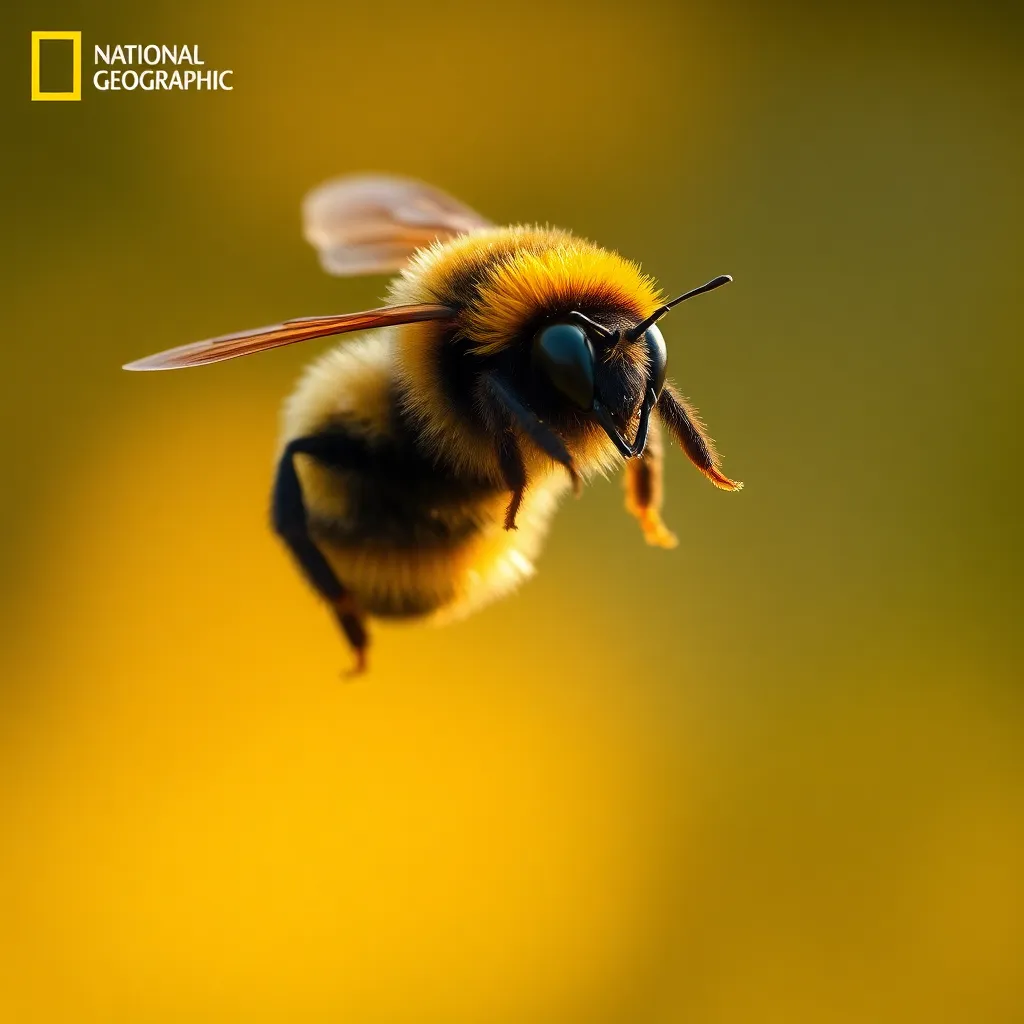
Their flight was once described as aerodynamically impossible by early fixed-wing analysis; in reality they use a short, rapid wingbeat creating small, efficient vortices.
03
Bumblebees can learn to pull a string to access a hidden food reward and teach this skill to naive nestmates — demonstrating social learning.
04
Worker bumblebees maintain their core thorax temperature at 30-38°C even in near-freezing air temperatures by shivering flight muscles.
05
The buff-tailed bumblebee was the first insect demonstrated to have a form of pessimistic cognitive bias when placed in a stressful context.
📍 Where to Find This Animal
Habitat Types:
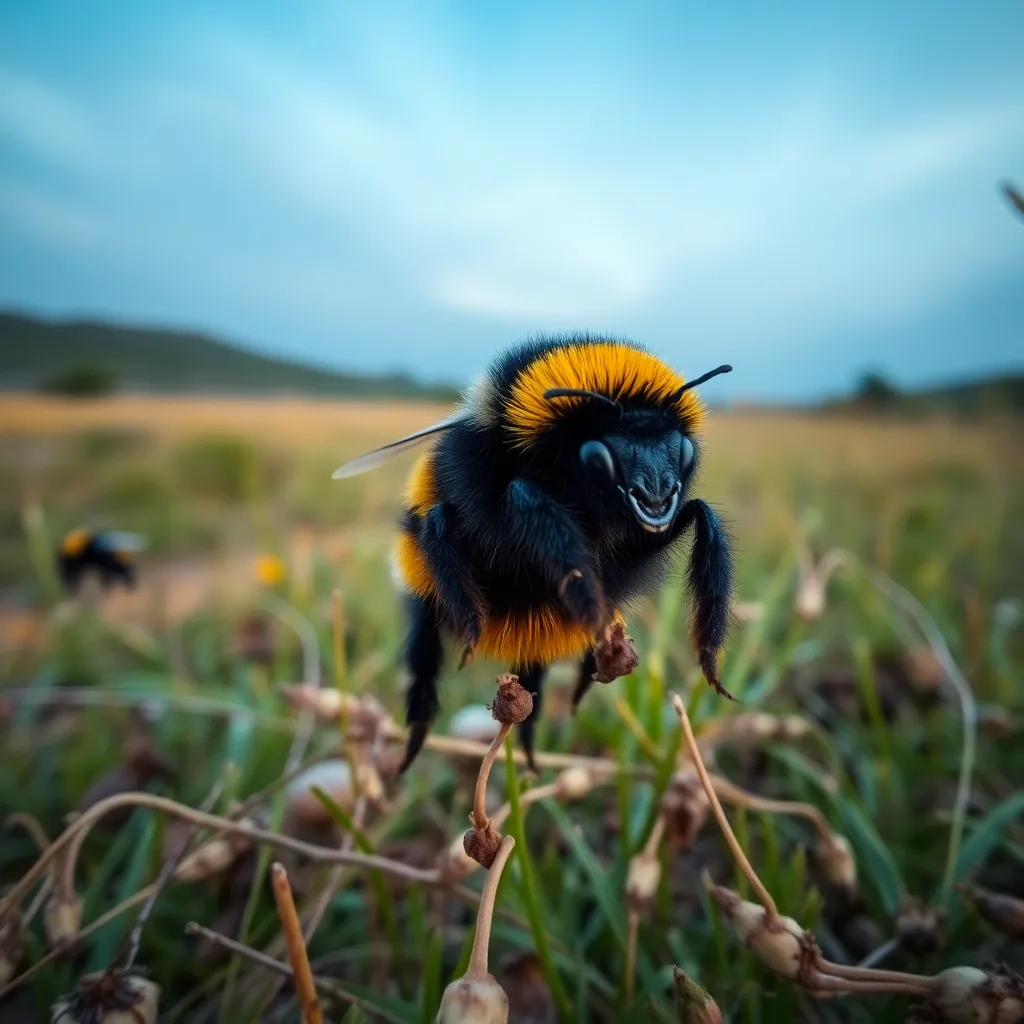
Meadows and Grasslands
🛒 Bumblebee Related Gear
As an Amazon Associate we earn from qualifying purchases.





Join the Conversation
Share your thoughts about the Bumblebee