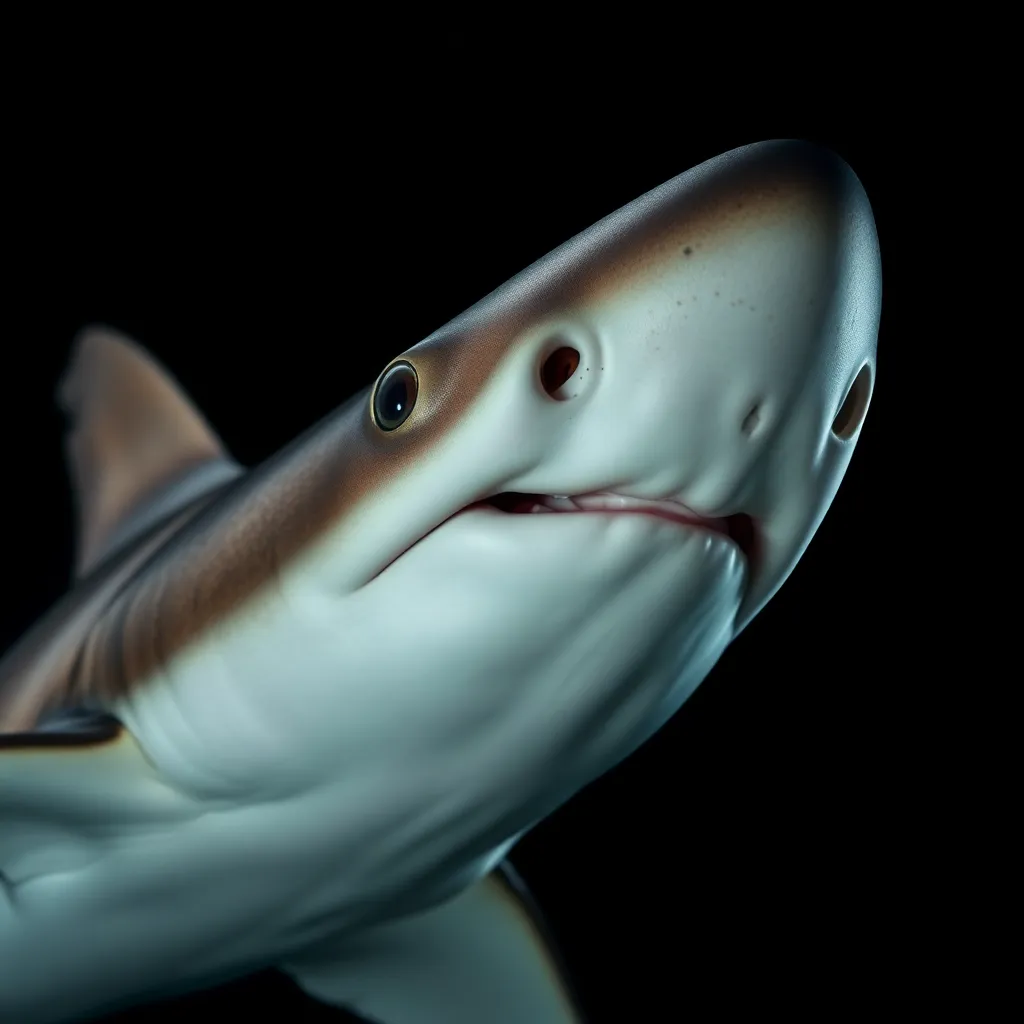
The great hammerhead is the largest of the nine hammerhead species and one of the ocean’s most distinctive apex predators. The distinctive cephalofoil — the hammer-shaped head — is heavily studded with ampullae of Lorenzini, providing extraordinary electroreception that allows detection of stingrays buried under sand. Great hammerheads are capable of 360-degree vision and can smell in stereo, localising scent sources with two nostrils separated by the full width of their head.
About the Hammerhead Shark
Sphyrna mokarran
Advertisement
⚡ Speed Comparison
📸 Photo Gallery

💡 Fun Facts
01
Great hammerheads are known to use their hammer to pin stingrays to the seafloor before biting off the wing edges — one individual was found with over 100 stingray tail spines embedded in its mouth and throat, apparently without ill effect.
02
Their cephalofoil contains a higher density of ampullae of Lorenzini than any other shark, enabling detection of electrical fields as weak as 5 nanovolts per centimetre.
03
Hammerheads swim in a constant banking posture — tilted up to 90 degrees sideways — using their dorsal fin as a second hydrofoil for greater efficiency.
04
They have binocular vision forward and backward simultaneously, giving them a near-360-degree visual field with only two small blind spots.
05
The great hammerhead is classified as critically endangered; their large fins are among the most valuable in the shark fin trade, driving targeted overfishing.
📍 Where to Find This Animal
Habitat Types:
Coral Reef
🛒 Hammerhead Shark Related Gear
As an Amazon Associate we earn from qualifying purchases.
Join the Conversation
Share your thoughts about the Hammerhead Shark