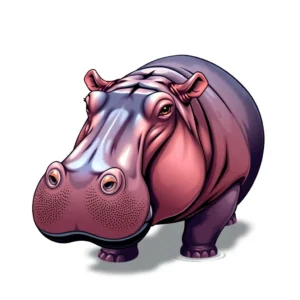
Loading Wildlife…

Hippopotamidae VU

THE

HIPPOPOTAMUS

River's Restless Colossus

Hippopotamus amphibius

Africa
CLASS Mammalia FAMILY Hippopotamidae GENUS Hippopotamus
~30 km/h
Top Speed
⚖️
1,500-3,200 kg
Max Weight
📏
3.3-5 m
Body Length
🕰️
40-50 years
Lifespan
🍖
Herbivore
Diet Type

IUCN Red List — Where this species stands

LC Least Concern
NT Near Threatened
VU Vulnerable
EN Endangered
CR Critical
EW Extinct Wild
EX Extinct

About the Hippopotamus

Hippopotamus amphibius

Advertisement

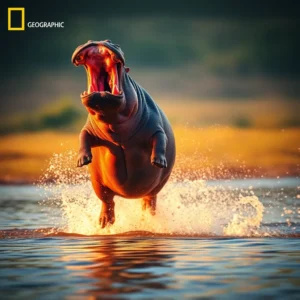
The hippopotamus is the third-largest land mammal and one of Africa’s most dangerous animals, responsible for more human fatalities than lions or crocodiles. Despite their barrel-shaped bulk, hippos are remarkably agile in water and can run at 30 km/h on land over short distances. Their skin secretes a natural sunscreen and antimicrobial compound called ‘blood sweat’ — a reddish fluid that moisturizes skin and protects against sunburn and bacterial infection.

⚡ Speed Comparison

Human
12 km/h
Hippopotamus
30 km/h
Car (city)
50 km/h
Horse
54 km/h

💡 Fun Facts

01

Hippos secrete a reddish fluid called 'blood sweat' that functions as a natural sunscreen and antibiotic, protecting their nearly hairless skin.

02

Despite being herbivores, hippos are highly territorial and aggressive; they can open their mouths to nearly 180 degrees, displaying tusks that can reach 50 cm.

03

Hippos spend up to 16 hours a day submerged to keep cool, emerging primarily at night to graze — they can hold their breath for up to 5 minutes.

04

Hippos are more closely related to whales and dolphins than to pigs, sharing a common ancestor from about 55 million years ago.

05

A single hippo can consume up to 35 kg of grass in a single night, and their dung fertilizes river ecosystems, supporting fish and aquatic biodiversity.

Unlock Expert Wildlife Facts

Watch a short 15-second video to unlock detailed expert analysis, exclusive wildlife photography, and rare behavioral facts.

📍 Where to Find This Animal

Habitat Types: Rivers & Wetlands

🛒 Hippopotamus Related Gear

As an Amazon Associate we earn from qualifying purchases.
🗨️

Join the Conversation

Share your thoughts about the Hippopotamus

✍️

Leave a Comment

Your email address will not be published. Required fields are marked *

How Big Is a Hippopotamus?

Side-by-side comparison with an adult human (175 cm)

🧍
Human
175 cm
🦛
Hippopotamus
65 cm
shoulder height
1,500-3,200 BODY WEIGHT
3.3-5 BODY LENGTH
~30 TOP SPEED
40-50 LIFESPAN
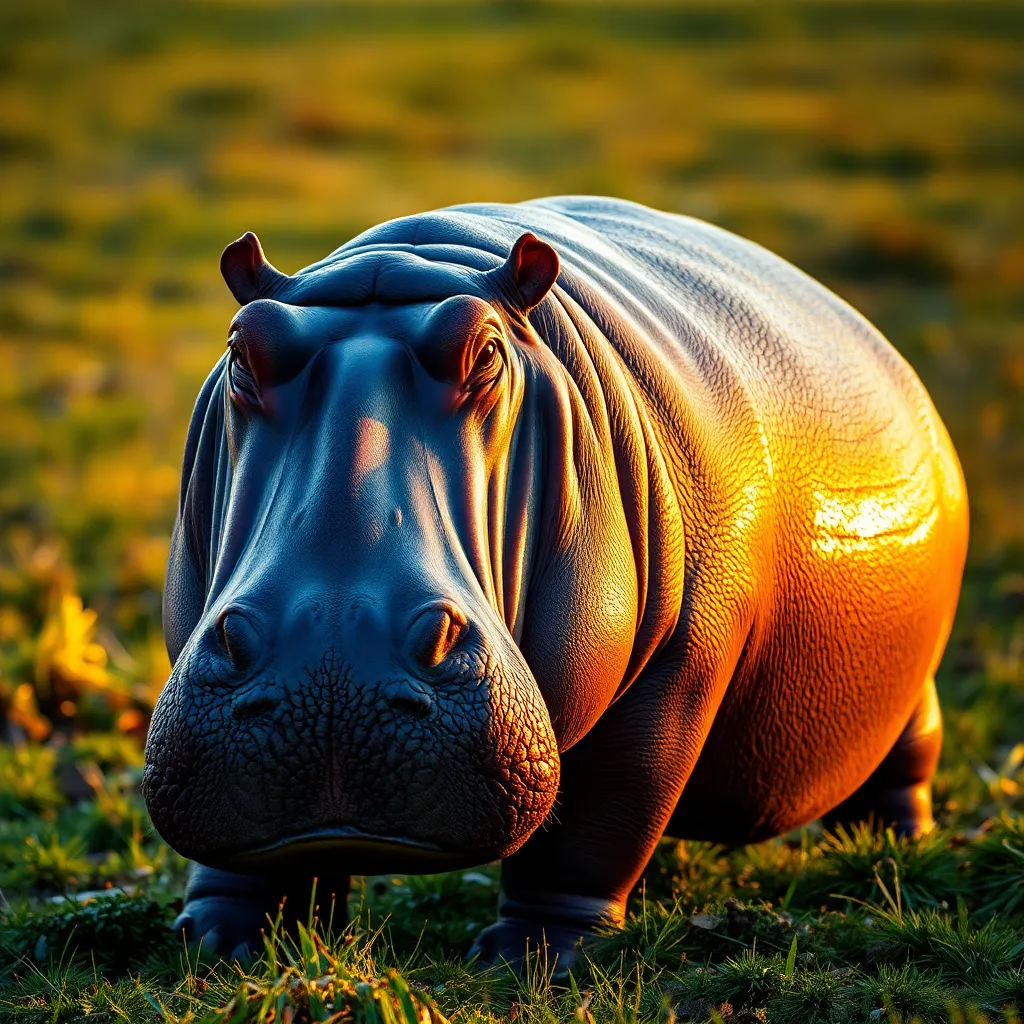
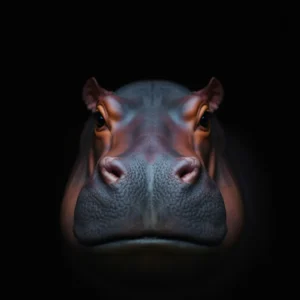
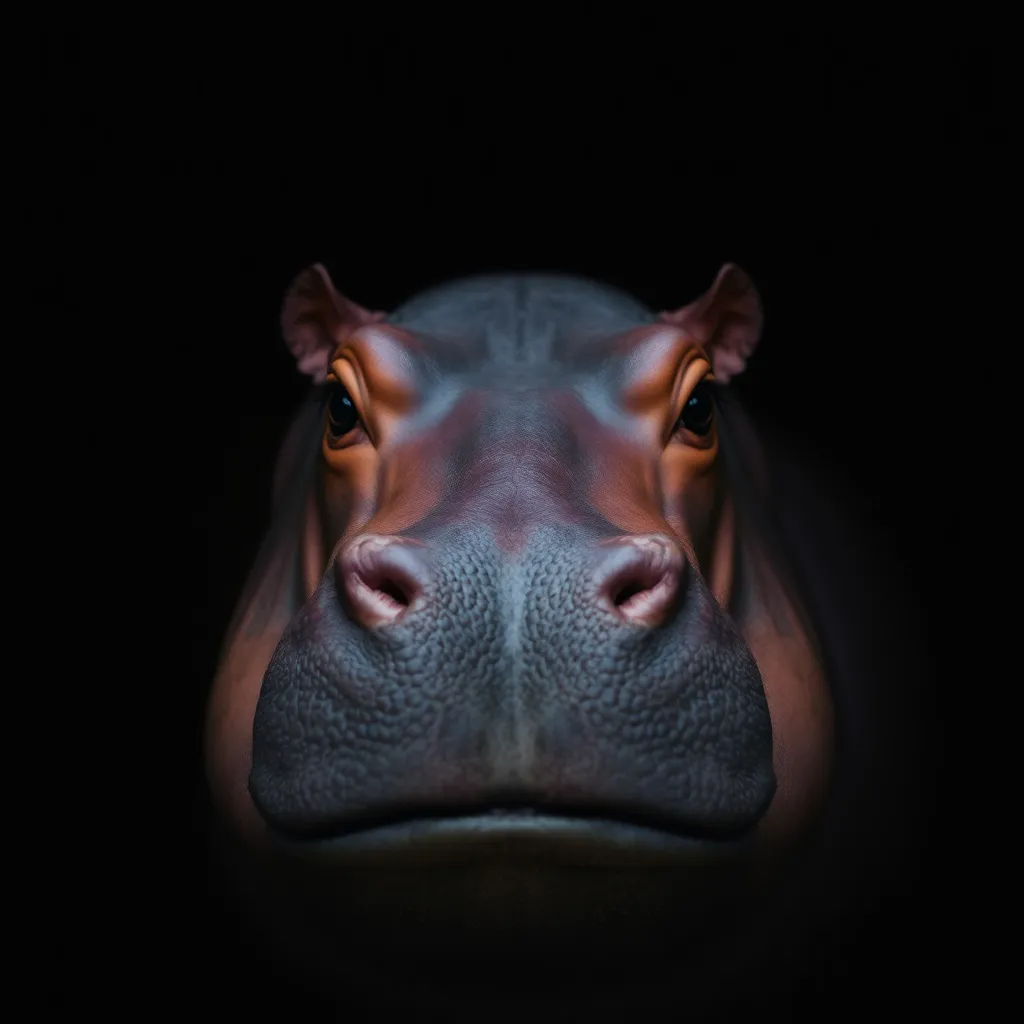
Hippopotamus close-up
Hippopotamus

SURVIVAL TOOLKIT

Built for Survival

Nature's engineering refined over millions of years

🔬 SURVIVAL TOOLKIT
Semi-Aquatic Physiology
01

Semi-Aquatic Physiology

Dense bones act as ballast, allowing hippos to walk along riverbeds; nostrils, eyes, and ears are positioned atop the skull for surface-breathing surveillance.

Blood Sweat Secretion
02

Blood Sweat Secretion

Skin glands produce a red viscous fluid containing unstable pigments that absorb UV radiation and inhibit bacterial growth.

Tusk Weaponry
03

Tusk Weaponry

Elongated lower canine teeth grow continuously up to 50 cm, used in violent territorial clashes with other males.

Nocturnal Grazing
04

Nocturnal Grazing

Emerging after dark to graze minimizes heat exposure and allows them to travel up to 10 km from water to feeding grounds.

Reflex Submersion
05

Reflex Submersion

Young hippos possess a reflex to close nostrils and ears and suckle underwater, and can swim before they can walk effectively on land.

River's Restless Colossus. An extraordinary creature that reminds us what we stand to lose.

Jungal Safari · Wildlife Network
💡

Did You Know?

Hippos secrete a reddish fluid called 'blood sweat' that functions as a natural sunscreen and antibiotic, protecting their nearly hairless skin.

🍖 DIET: HERBIVORE

What Does the Hippopotamus Eat?

🌿
Short grasses
🌾
Reeds & sedges
🍃
Leaves & shrubs
🌱
Aquatic vegetation
🗺️ GEOGRAPHIC RANGE

Where Do Hippopotamuss Live?

🌍
Continents
📉
Population Trend Declining

Conservation in Action

How You Can Help the Hippopotamus

Small actions, taken together, can reverse the decline of species like this one

🌳
Protect Habitat

Support wildlife reserves and protected land corridors

🚫
Stop Poaching

Report illegal trade and back anti-poaching patrols

🔬
Fund Research

Camera-trap studies and population monitoring

🤝
Community Work

Partner with local herders to reduce conflict

📢
Raise Awareness

Educate and inspire future wildlife champions

"Without urgent action, the Hippopotamus could disappear from the wild within our lifetime."

PROTECT THEM. PRESERVE THEIR LEGACY.

The Hippopotamus's Future
Is In Our Hands

Every share, every donation, every voice raised — makes a difference for wildlife conservation.

🌳Protect Habitat
📢Raise Awareness
💰Fund Research
🤝Community Work
🚫Stop Poaching

"Protect Wildlife. Preserve Our Planet."

Every species matters. Every action counts.

Advertisement