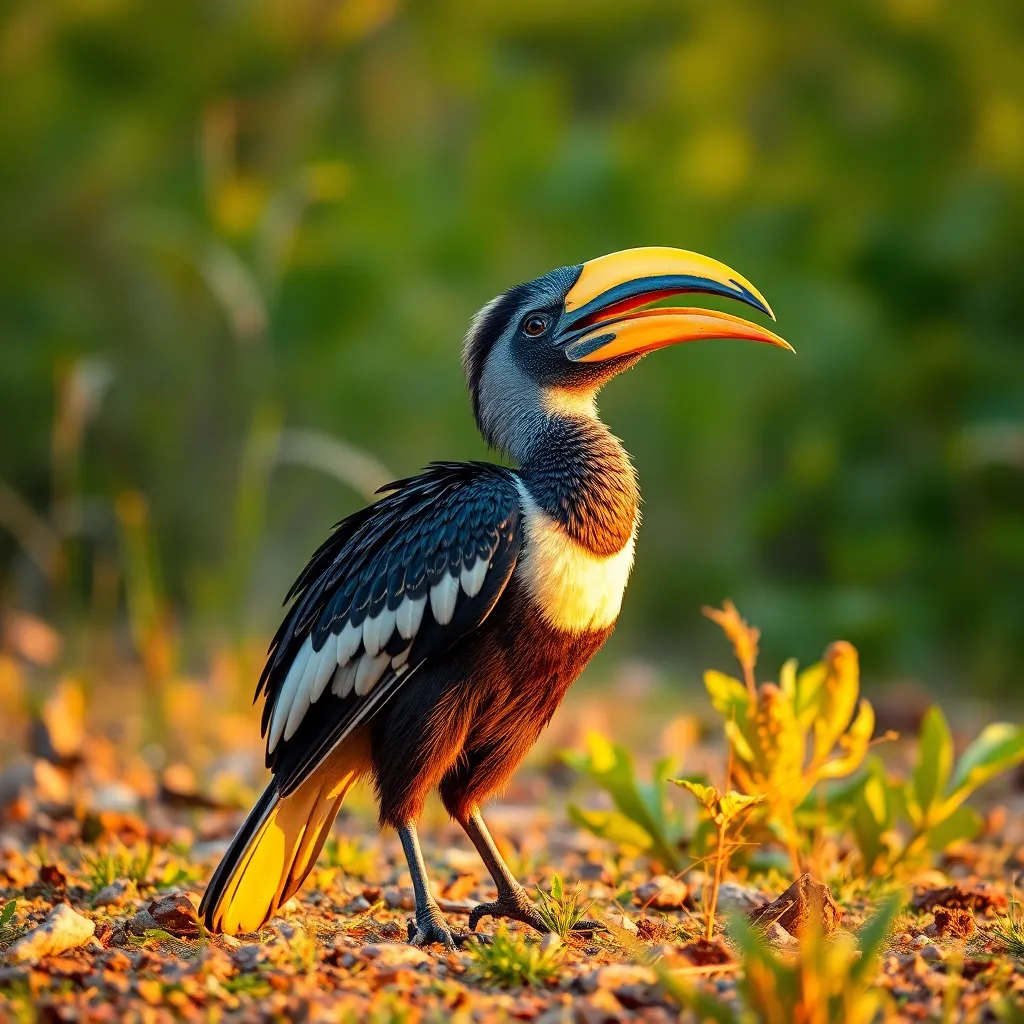
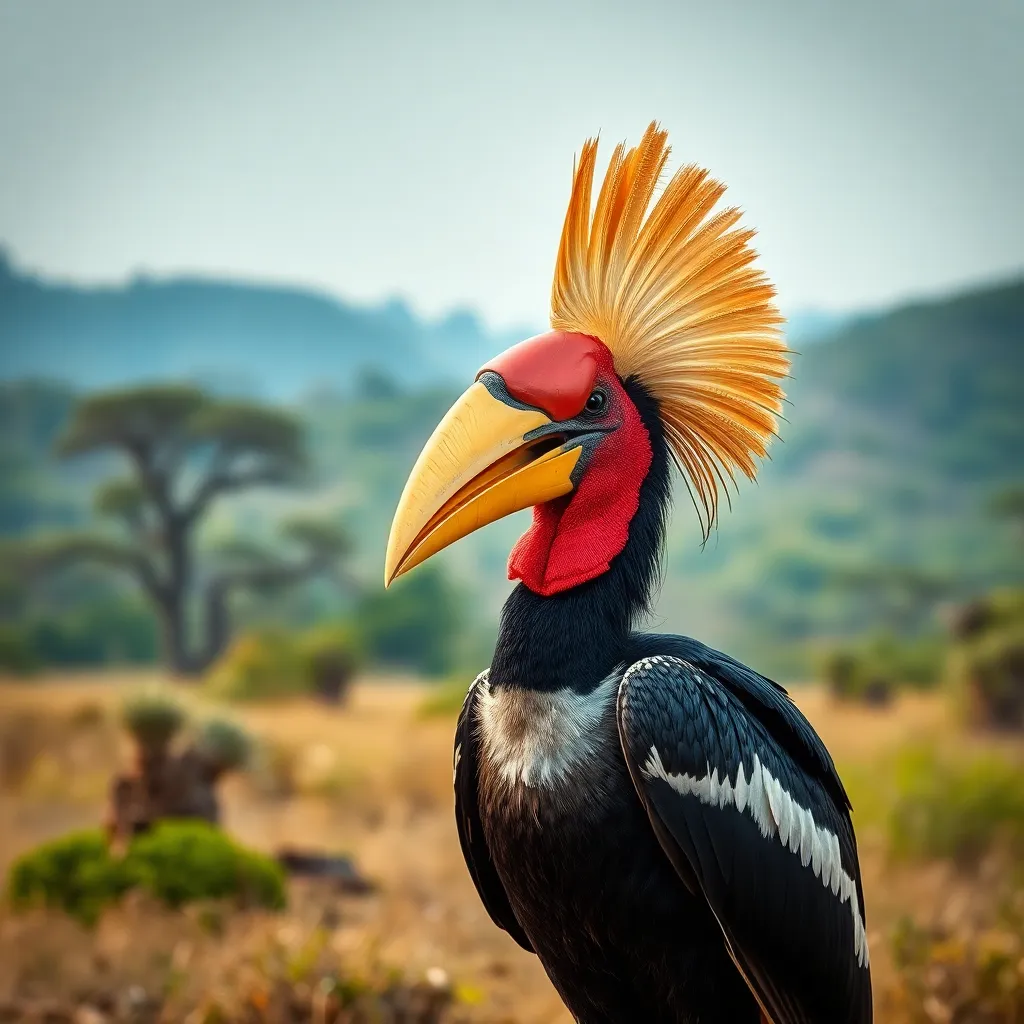
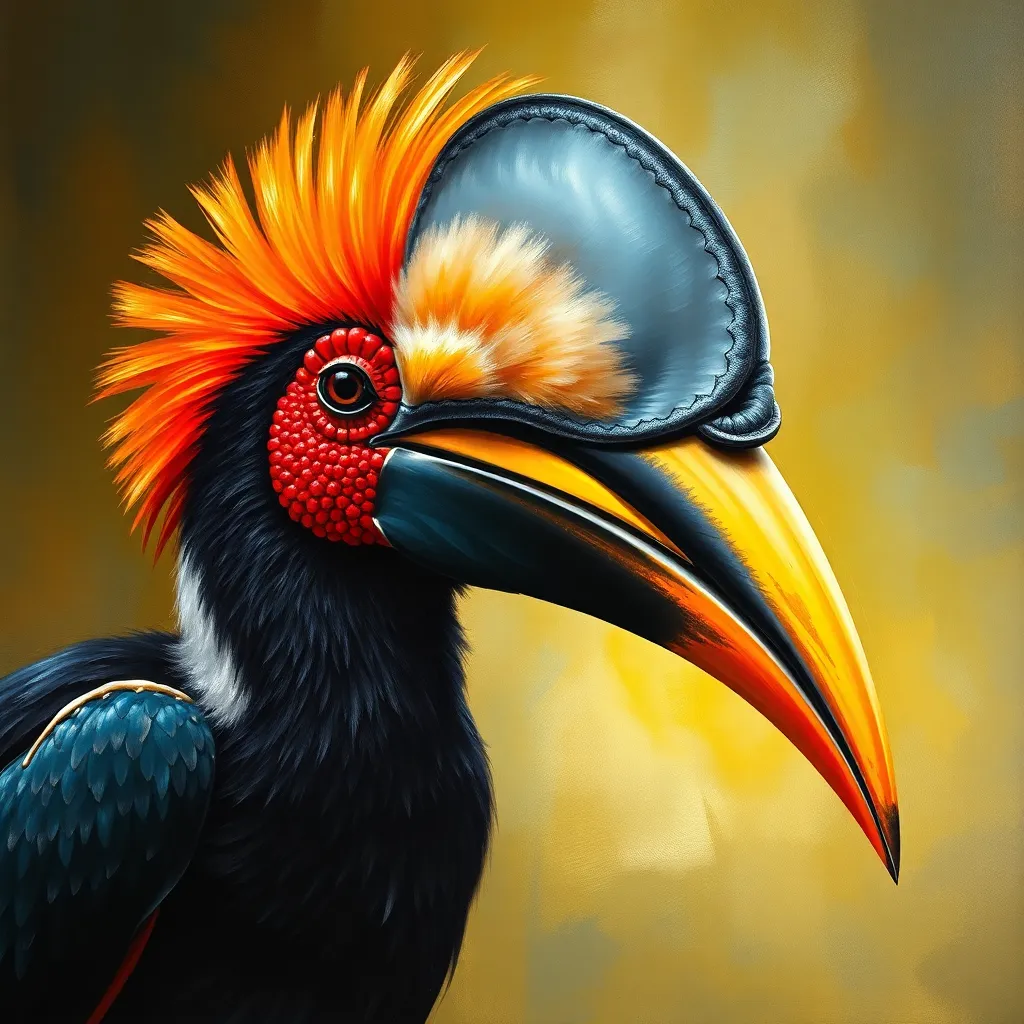
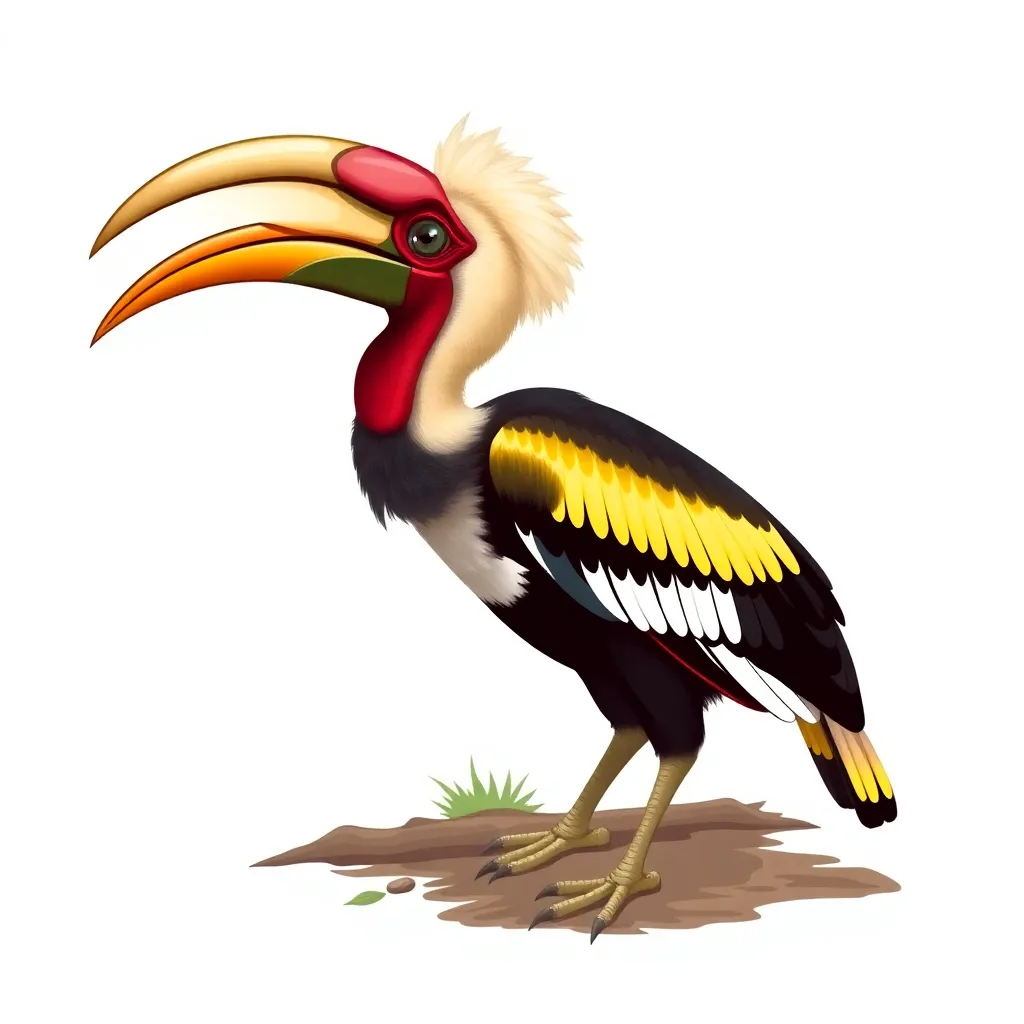
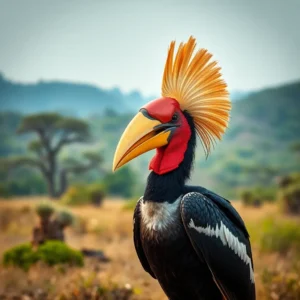
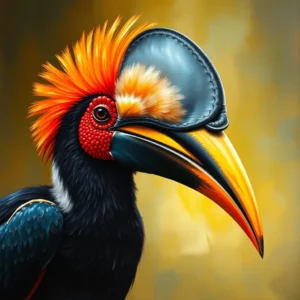
The rhinoceros hornbill is one of the most spectacular birds of the Bornean and Sumatran rainforests, instantly recognizable by its enormous bright-red and yellow casque atop the bill — a structure that functions as a sound amplifier and is used in aerial jousting between rival males. It plays a crucial ecological role as a large-fruited seed disperser, carrying fig fruits and other large seeds long distances through the forest. The female seals herself inside a hollow tree with mud during nesting, leaving only a narrow slit through which the male feeds her for the entire incubation and chick-rearing period.
About the Hornbill
Buceros rhinoceros
Advertisement
⚡ Speed Comparison
📸 Photo Gallery

💡 Fun Facts
01
The female rhinoceros hornbill seals herself inside a tree hollow with mud mixed with feces and fruit pulp, remaining imprisoned for up to 4 months while the male exclusively feeds her through a slit.
02
The hornbill's casque is hollow in most species but solid ivory-like keratin in the helmeted hornbill — poached illegally for carving and more valuable by weight than elephant ivory.
03
Hornbills are the only birds with fused neck vertebrae (the first two), which helps support the heavy bill and casque.
04
The casque resonates and amplifies the bird's calls, acting like a built-in megaphone that projects territorial calls across the rainforest canopy.
05
Hornbills are known as the 'farmers of the forest' because they disperse seeds of up to 100 tree species, often depositing them far from the parent tree in their droppings.
📍 Where to Find This Animal
Habitat Types:
Tropical Rainforest
🛒 Hornbill Related Gear
As an Amazon Associate we earn from qualifying purchases.



Join the Conversation
Share your thoughts about the Hornbill