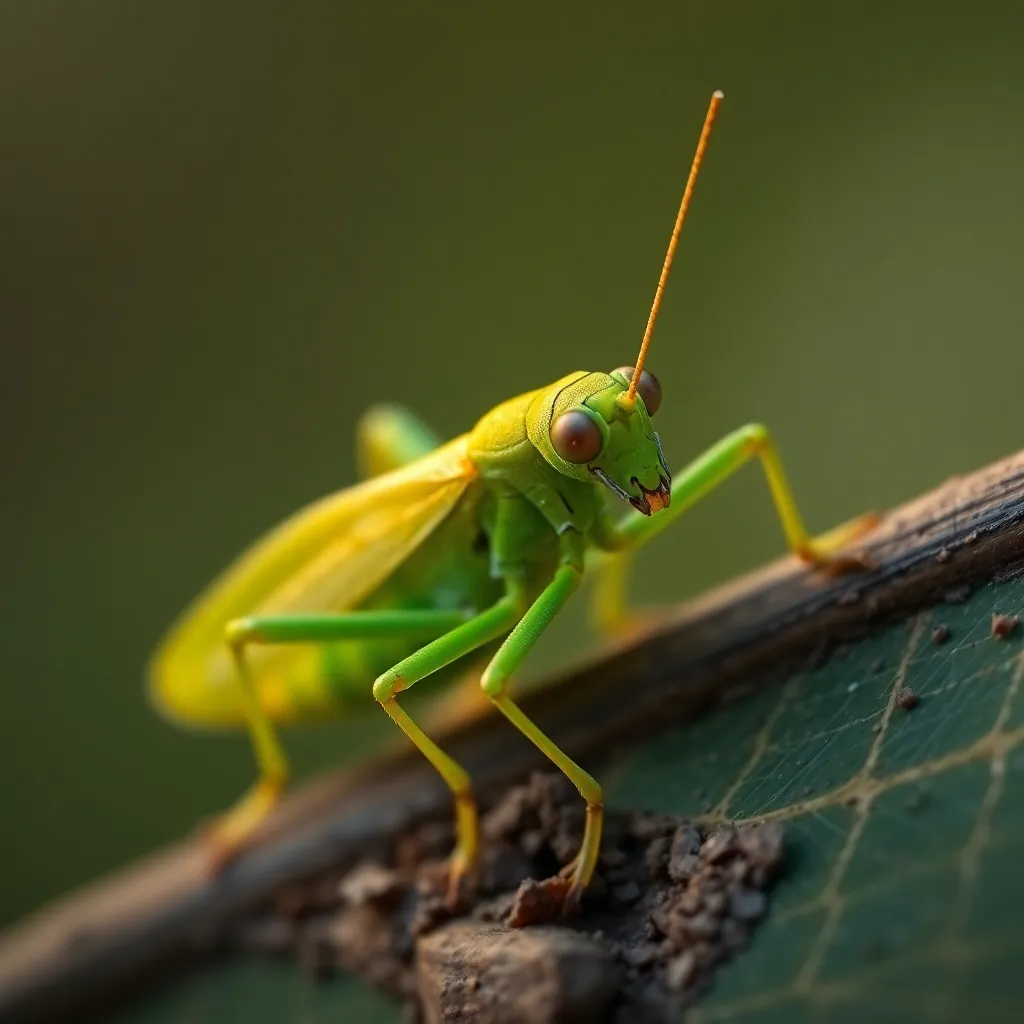
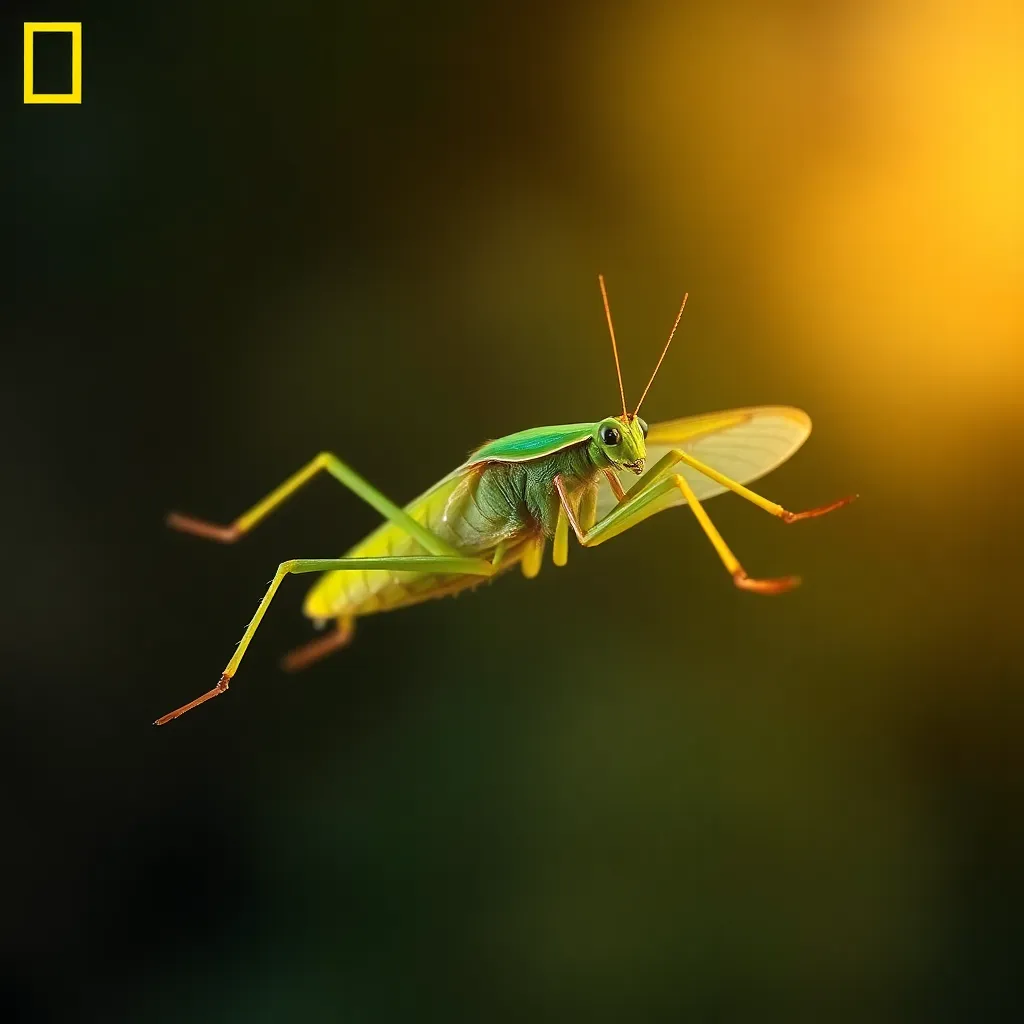
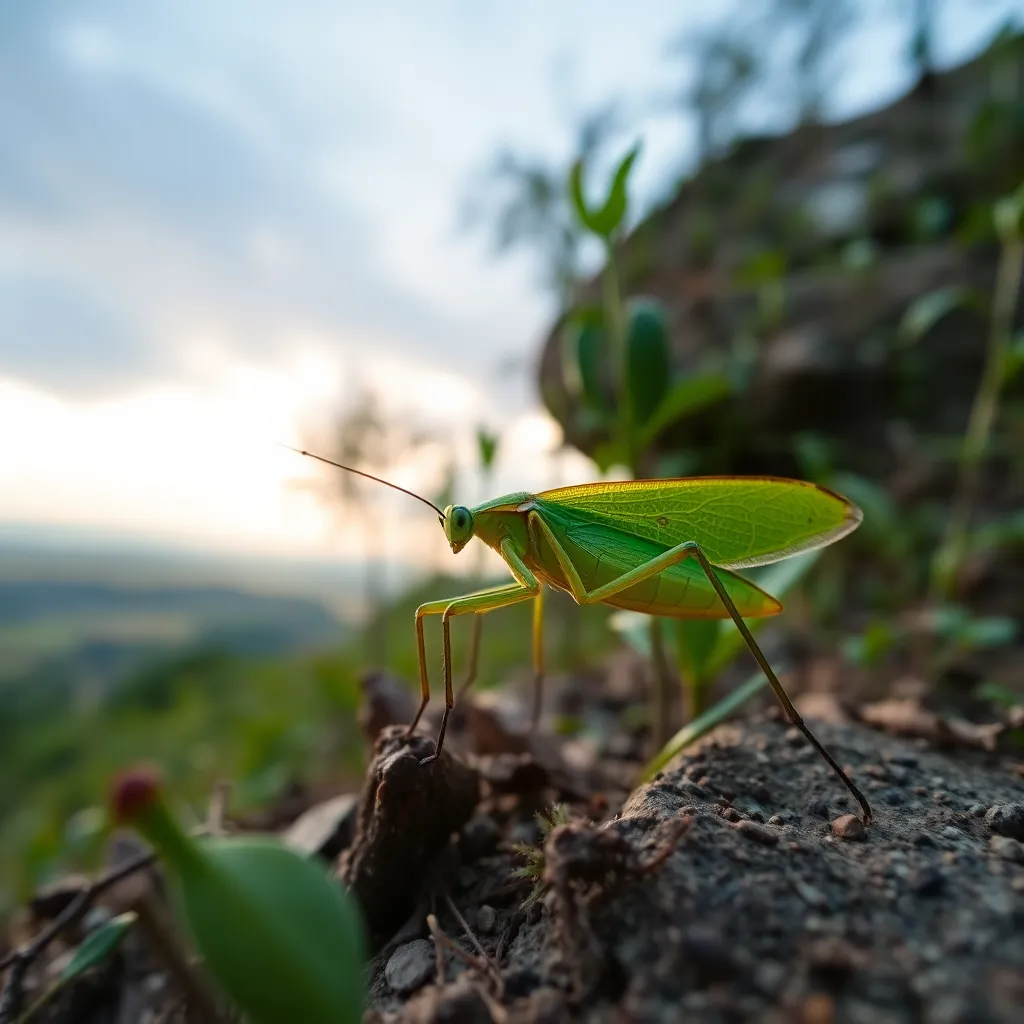
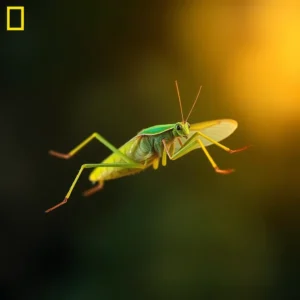
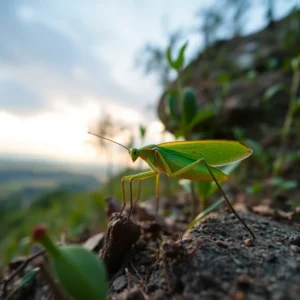
The great green bush-cricket, or katydid, is a master of camouflage and acoustic communication, its leaf-like body virtually indistinguishable from the foliage it inhabits. Males produce their characteristic stridulation — the rasping song of summer evenings — by rubbing a toothed file on one wing against a scraper on the other, a structure called the stridulatory apparatus. Each katydid species has a uniquely coded call, allowing females to identify suitable mates of their own species in a dense chorus of competing sounds.
About the Katydid
Tettigonia viridissima
Advertisement
⚡ Speed Comparison
📸 Photo Gallery


💡 Fun Facts
01
Katydid ears are located on the front legs, just below the 'knee' joint — tiny oval membranes called tympanic organs that detect sound with remarkable sensitivity.
02
The name 'katydid' is onomatopoeic, derived from the three-pulse call of North American species that sounds like 'Katy-did, Katy-didn't.'
03
Some katydid species mimic dead or damaged leaves with extraordinary fidelity, including fake bite marks, vein patterns, fungal spots, and irregular edges.
04
A female katydid has a prominent sword-like ovipositor that can be longer than its body, used to insert eggs into stems or soil with surgical precision.
05
Katydid wings are purely acoustic instruments in males — the right wing bears the file and the left bears the scraper, and each species' file has a unique tooth density that produces a species-specific frequency.
📍 Where to Find This Animal
Habitat Types:
Meadows, Hedgerows, Shrubland
🛒 Katydid Related Gear
As an Amazon Associate we earn from qualifying purchases.

Join the Conversation
Share your thoughts about the Katydid