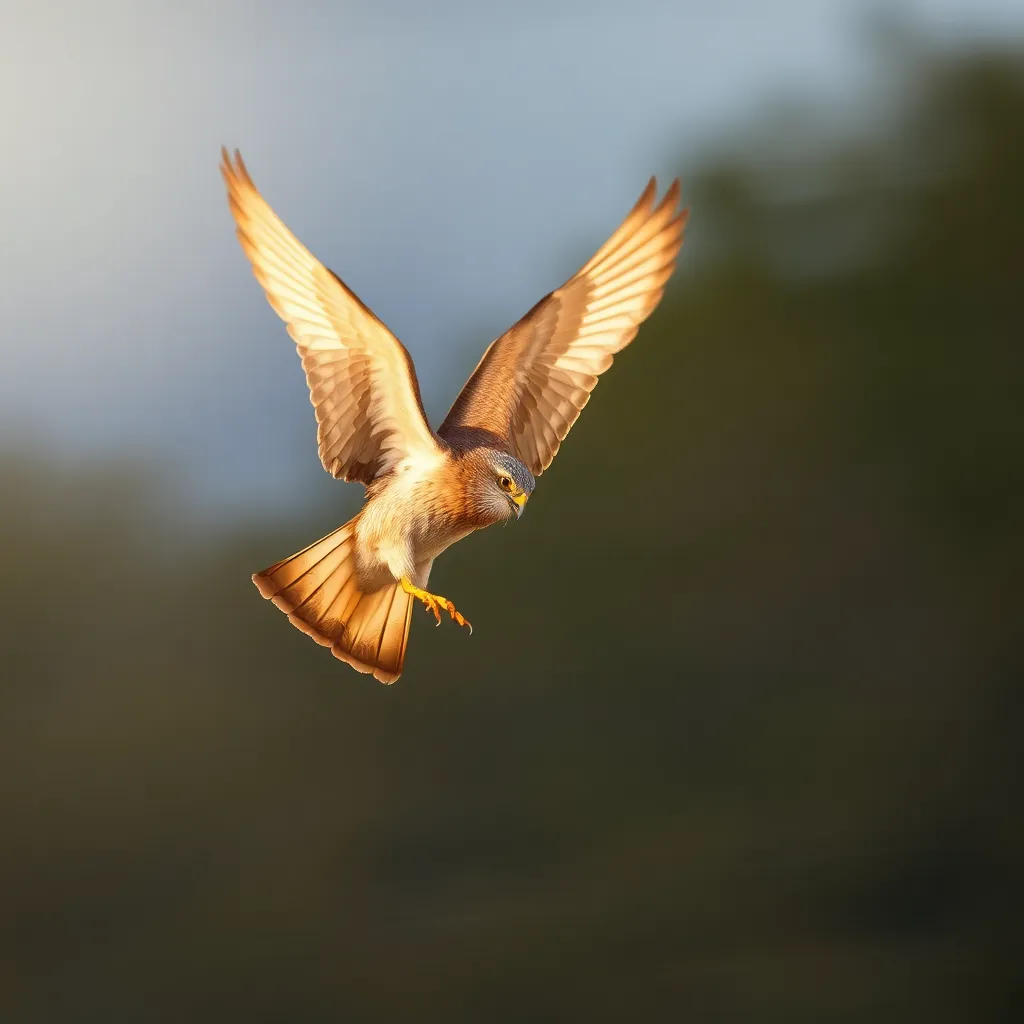
The common kestrel is Europe’s most familiar falcon, instantly recognizable by its remarkable hovering behavior — facing into the wind with rapidly beating wings while scanning the ground below for prey. This small but lethal raptor detects voles and mice partly by seeing their ultraviolet-fluorescing urine trails invisible to human eyes. Adaptable enough to hunt over motorway verges, farmland, cliffs, and urban parks, the kestrel is one of the UK’s most widespread and watched birds of prey.
About the Kestrel
Falco tinnunculus
Advertisement
⚡ Speed Comparison
📸 Photo Gallery




💡 Fun Facts
01
Kestrels can see ultraviolet light, allowing them to follow the UV-fluorescent urine trails left by voles and mice to locate runways and active burrows.
02
A hovering kestrel keeps its head almost perfectly stationary while its body rocks in the wind — the head stays locked on target while the body gyrates below.
03
Kestrels do not build nests — they use ledges on cliff faces, disused crow nests, or purpose-built nest boxes.
04
A kestrel's dive speed can exceed 80 km/h, striking prey with talons while rarely damaging itself due to controlled braking just before impact.
05
Female kestrels are larger than males (a phenomenon called reversed sexual size dimorphism) and tend to hunt larger prey than their smaller male partners.
📍 Where to Find This Animal
Habitat Types:
Open Farmland & Grasslands
🛒 Kestrel Related Gear
As an Amazon Associate we earn from qualifying purchases.




Join the Conversation
Share your thoughts about the Kestrel