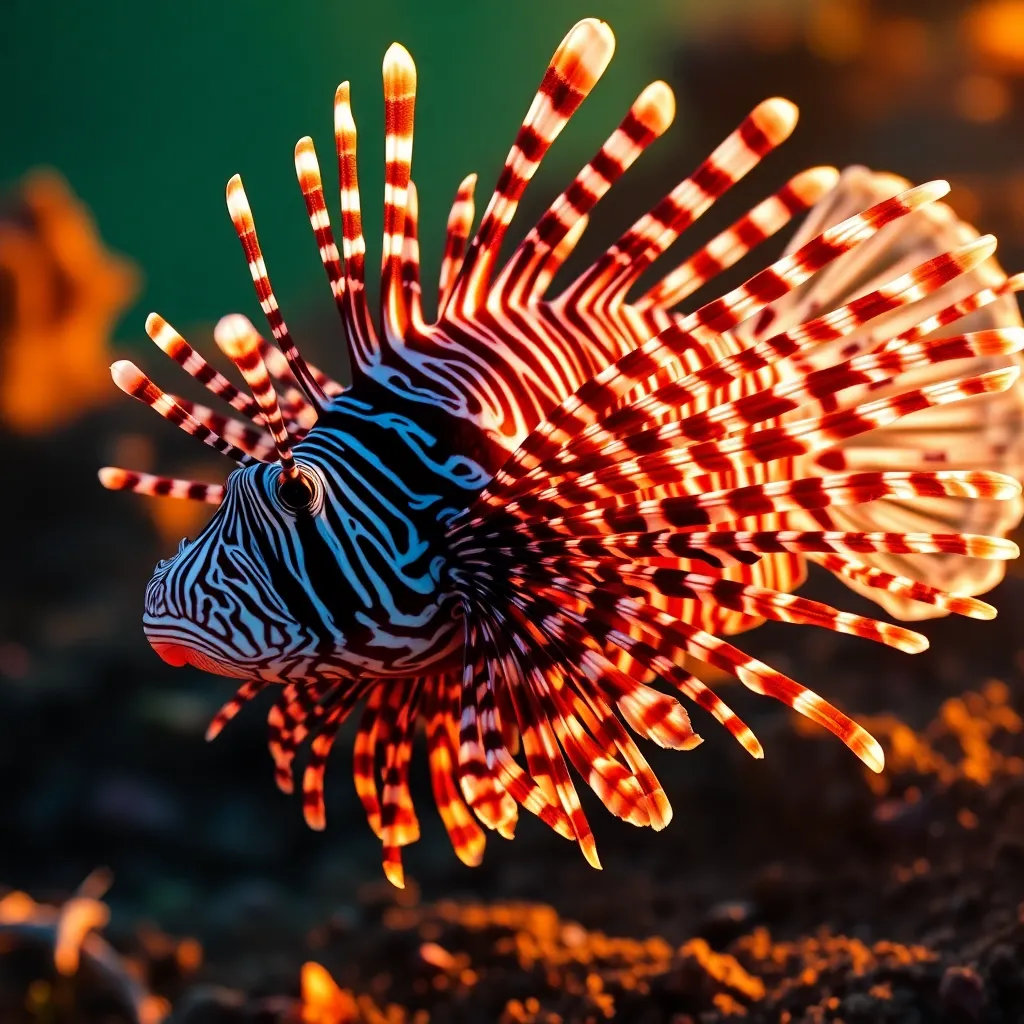
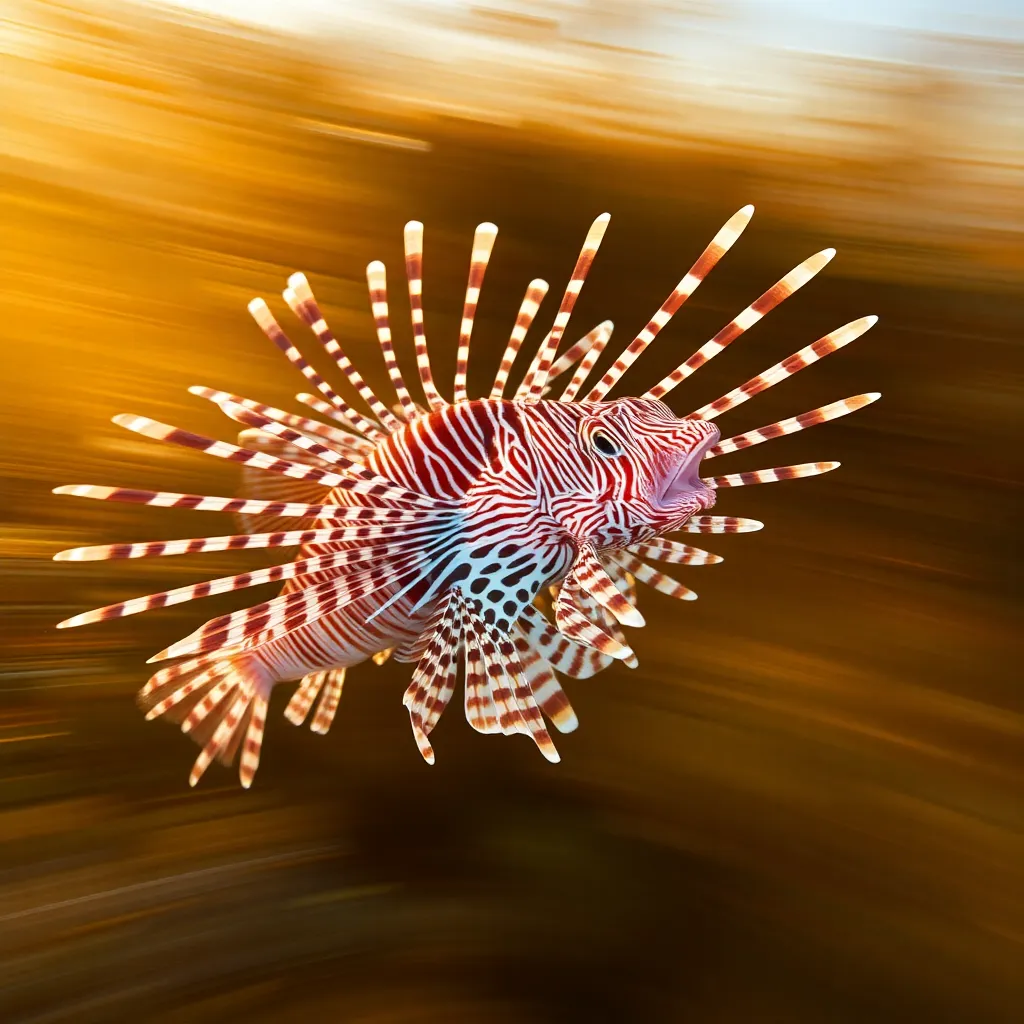
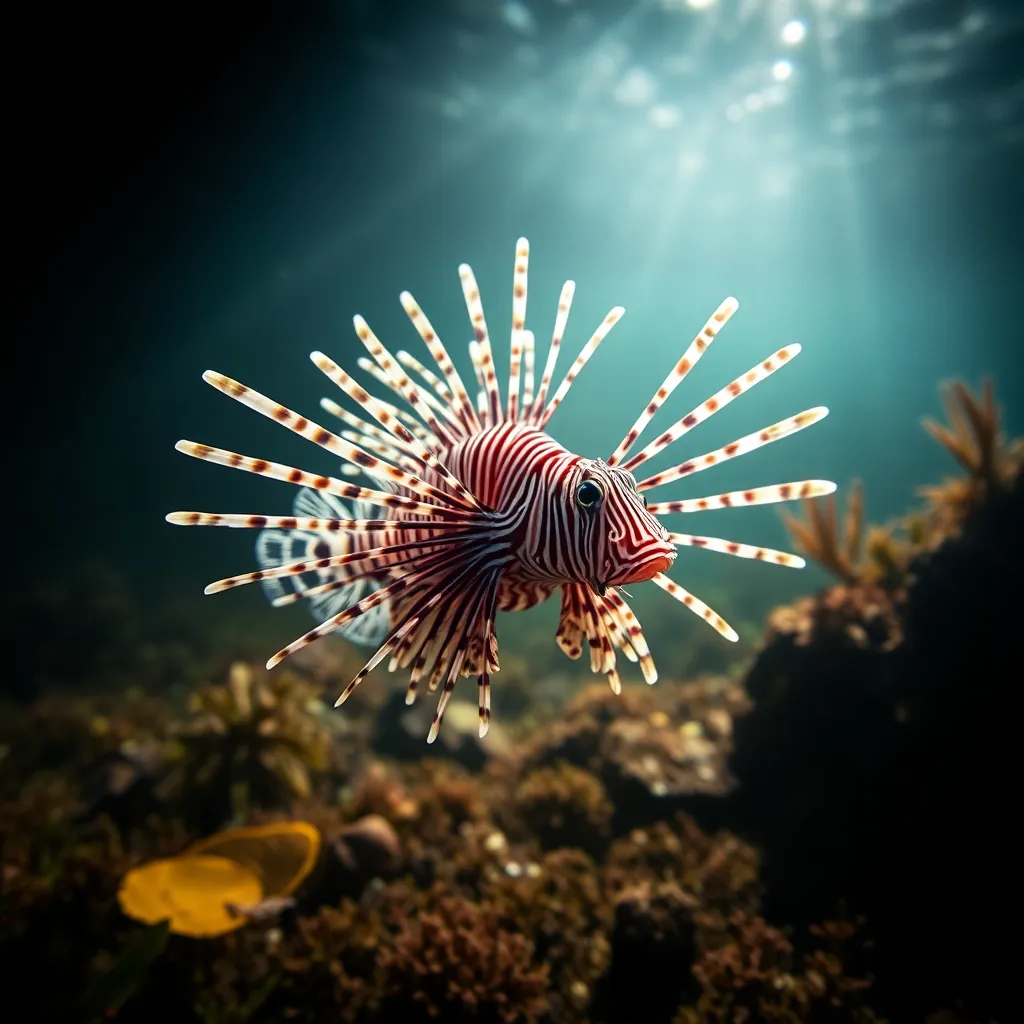
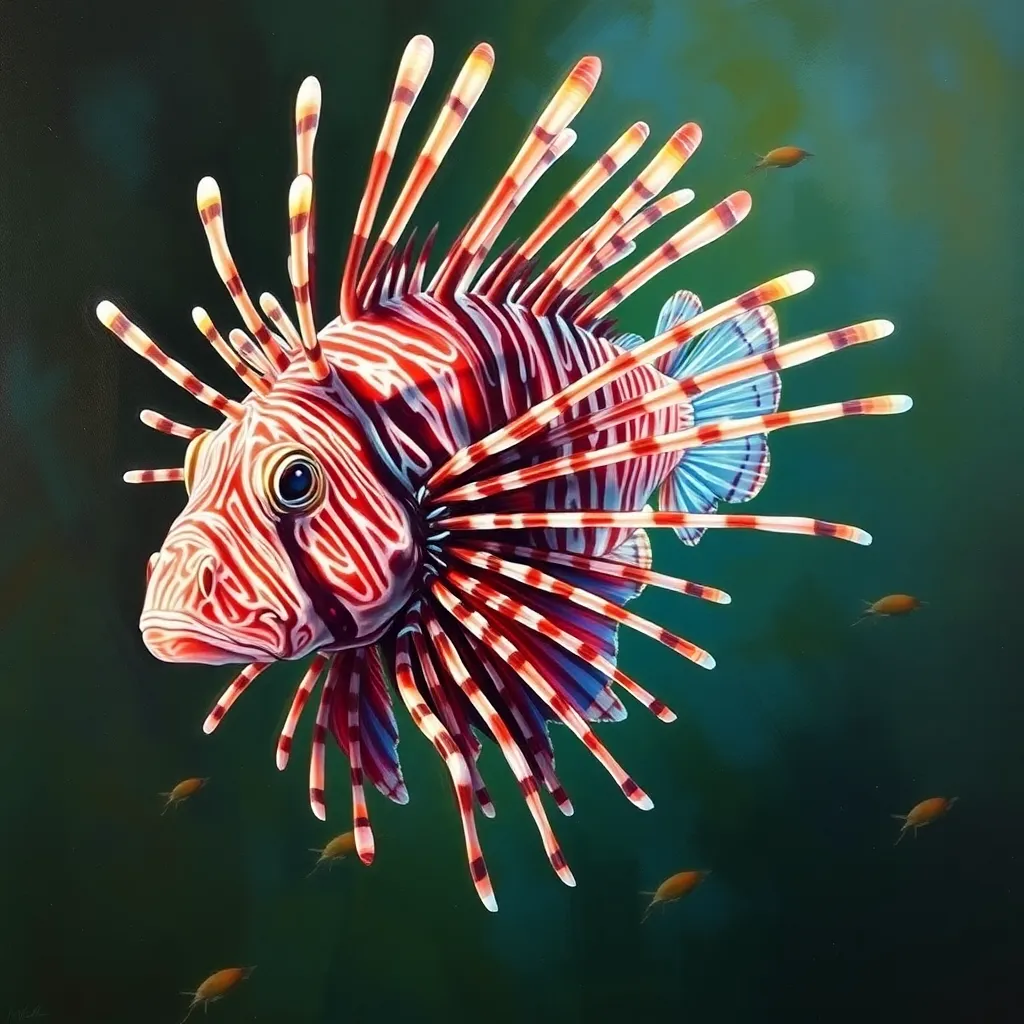
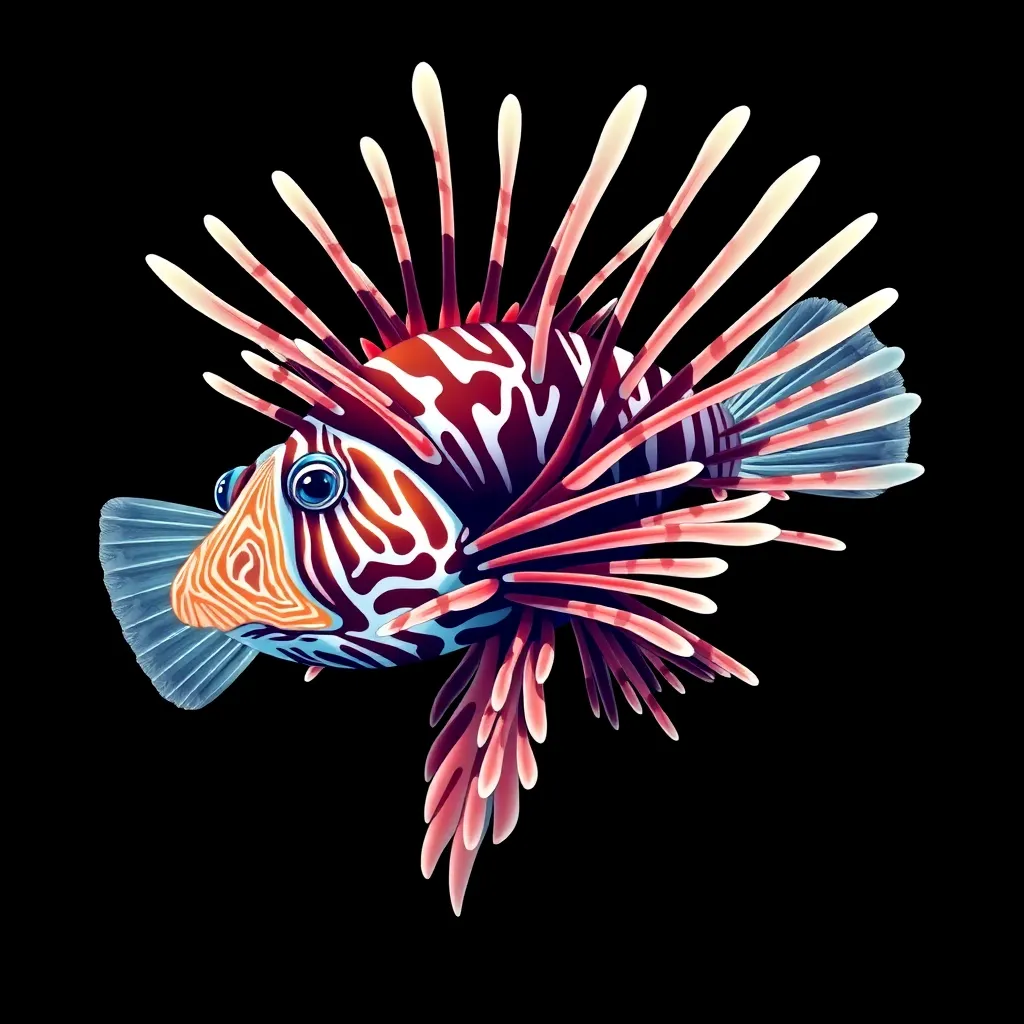
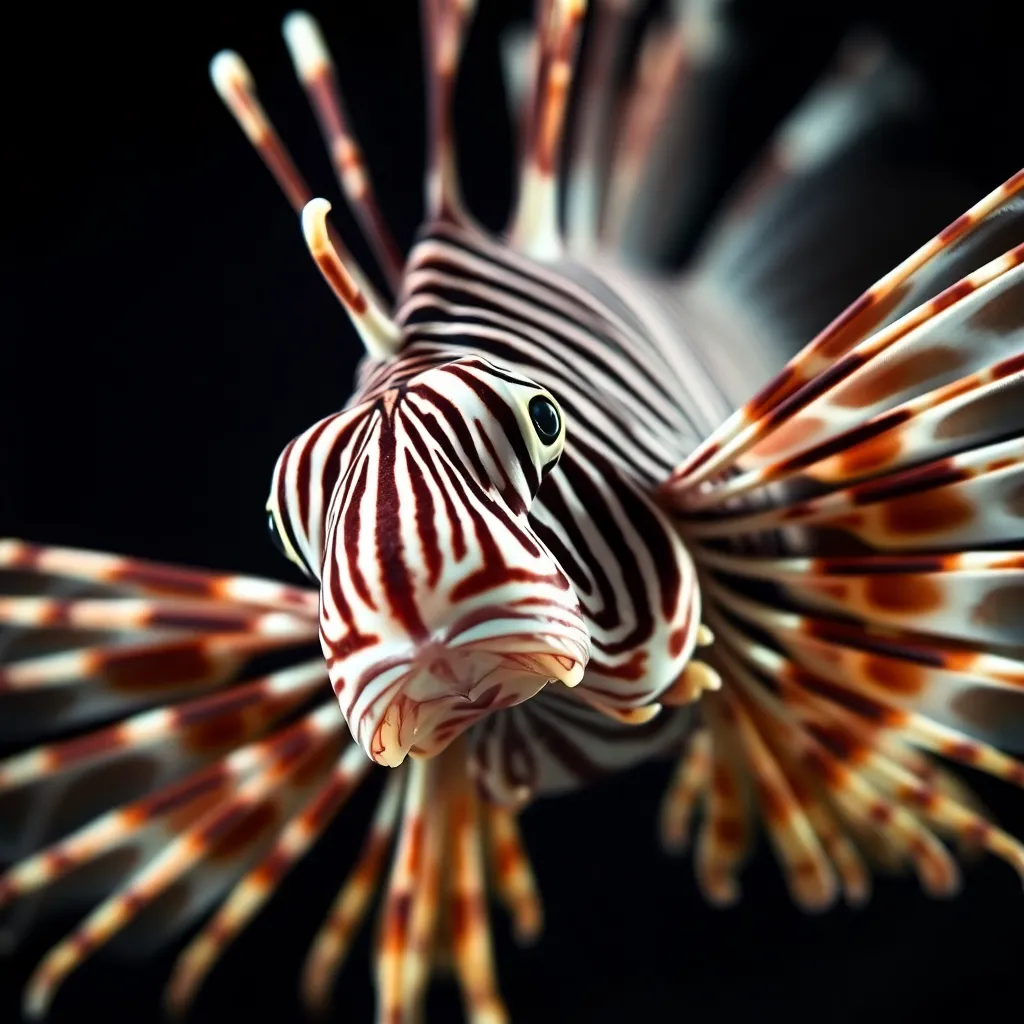
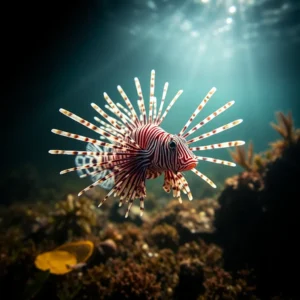
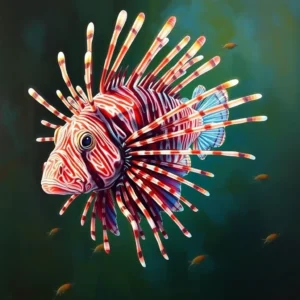
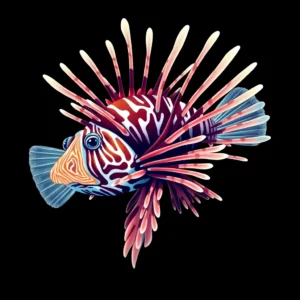
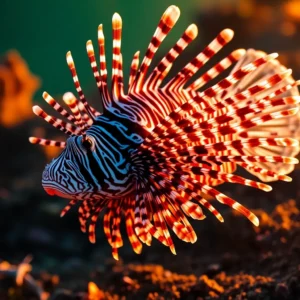
The red lionfish is one of the most recognizable reef fish in the world, adorned with dramatic striped coloration and a spectacular fan of long, venomous dorsal spines used purely for defense. Native to the Indo-Pacific, it has become one of the most ecologically damaging marine invasive species in the Atlantic and Caribbean after aquarium releases in the 1980s–1990s. In its invaded range, lionfish have devastated native reef fish populations by up to 90% in some areas because Atlantic prey fish have no evolved fear of them.
About the Lionfish
Pterois volitans
Advertisement
⚡ Speed Comparison
📸 Photo Gallery
💡 Fun Facts
01
Lionfish can consume prey up to twice their own body size by expanding their stomach to 30 times its empty volume; in the Atlantic, one lionfish can reduce juvenile fish recruitment on a patch reef by 79% within just five weeks.
02
The venom apparatus in a lionfish's dorsal, pelvic, and anal spines functions purely defensively — it has no role in capturing prey — yet delivers intense pain, swelling, and in rare cases cardiac effects.
03
Atlantic lionfish — descendants of fewer than 10 individuals likely released from Florida aquariums — have now colonized 7.3 million km² of ocean from North Carolina to Brazil.
04
Lionfish have been recorded hunting cooperatively, using their outspread pectoral fins to herd small fish into corners against the reef before striking.
05
Females can spawn year-round, releasing up to 2 million eggs per year in mucus-covered floating egg masses that are immune to the sting of the spines — the primary reason their invasion has been so explosive.
📍 Where to Find This Animal
Habitat Types:
Coral Reef & Rocky Reef (Indo-Pacific; invasive Atlantic)
🛒 Lionfish Related Gear
As an Amazon Associate we earn from qualifying purchases.
Join the Conversation
Share your thoughts about the Lionfish