Loading Wildlife…

Varanidae LC

THE

MONITOR LIZARD

Ancient Dragon of the River Banks

Varanus niloticus

Africa
CLASS Reptilia FAMILY Varanidae GENUS Varanus
29 km/h
Top Speed
⚖️
5–15 kg
Max Weight
📏
1.2–2.1 m
Body Length
🕰️
10–20 years
Lifespan
🍖
Carnivore
Diet Type

IUCN Red List — Where this species stands

LC Least Concern
NT Near Threatened
VU Vulnerable
EN Endangered
CR Critical
EW Extinct Wild
EX Extinct

About the Monitor Lizard

Varanus niloticus

Advertisement

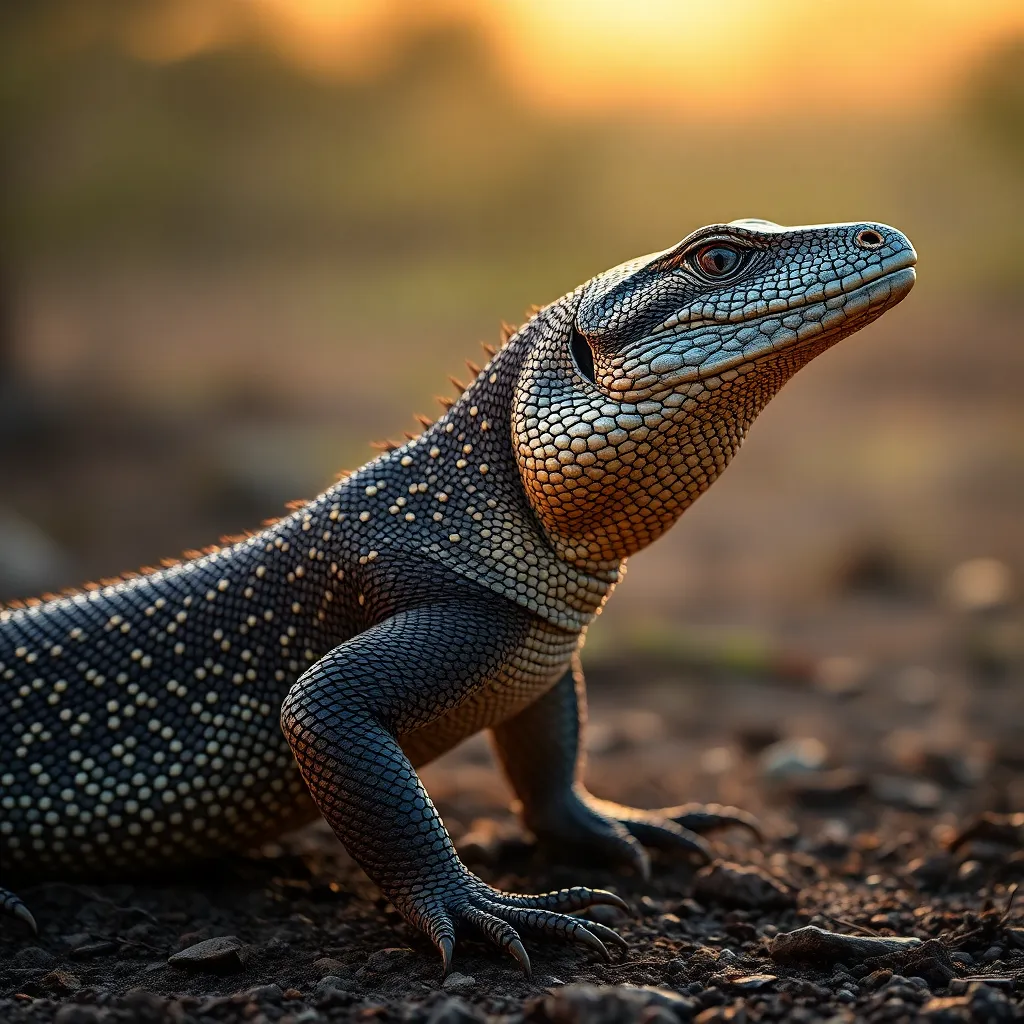
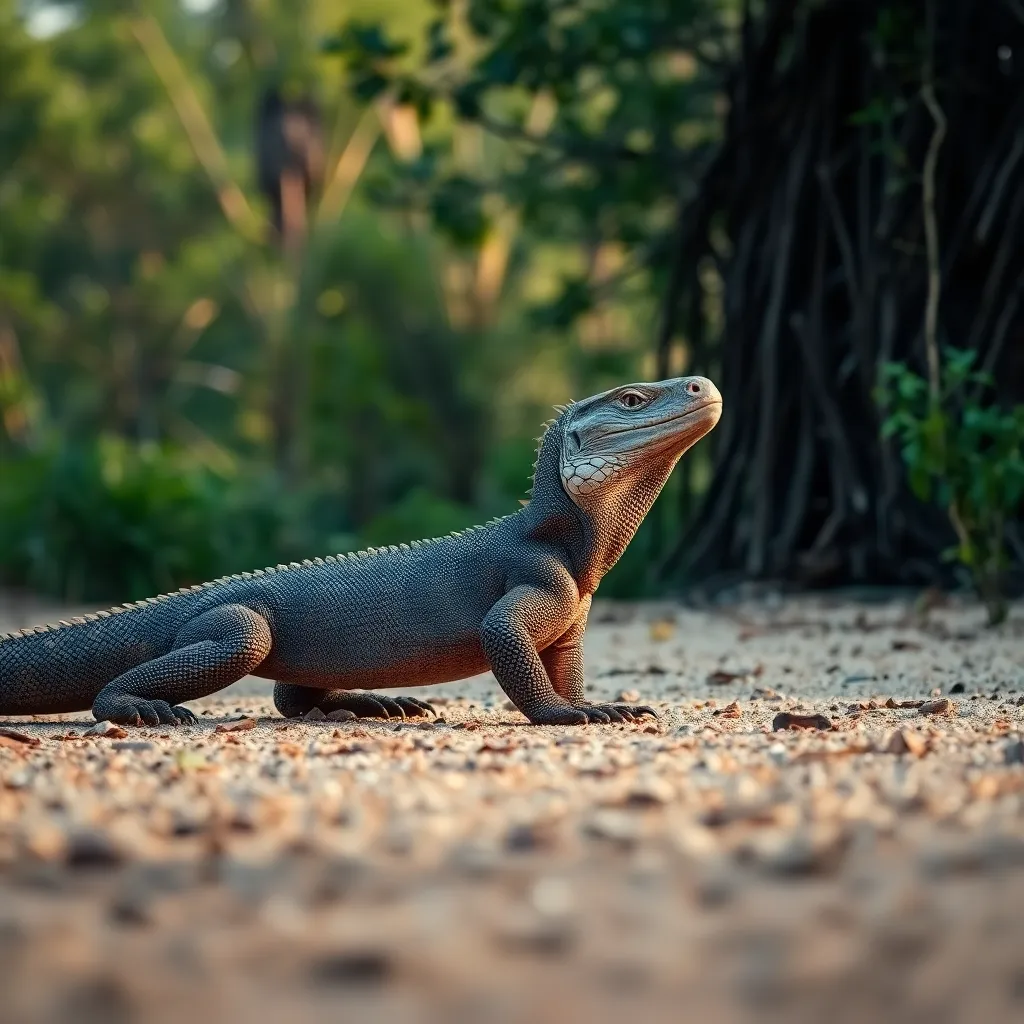
The Nile monitor is Africa’s largest lizard and one of the most predatorily versatile reptiles on the continent, equally adept at hunting in water, on land, and up trees. Unlike most reptiles, varanids have a forked tongue and vomeronasal organ system equivalent to snakes, giving them highly developed chemosensory tracking abilities. Nile monitors also possess a more developed cardiovascular and respiratory system than other lizards — with a partially divided heart and a unique air sac system — giving them stamina and an activity endurance far exceeding typical reptiles.

⚡ Speed Comparison

Human
12 km/h
Monitor Lizard
29 km/h
Car (city)
50 km/h
Horse
54 km/h

💡 Fun Facts

01

Nile monitors and their relatives have the most mammal-like cardiovascular system of any reptile — a functionally four-chambered heart that maintains higher blood pressure during activity, enabling sustained aerobic exercise.

02

Monitor lizards use their forked tongue to collect scent particles and transfer them to a vomeronasal organ in the roof of the mouth, essentially 'tasting the air' with stereo chemical detection.

03

Nile monitors raid Nile crocodile nests, digging up eggs to eat them — they are one of the few animals that regularly and successfully steal from crocodiles without being eaten.

04

Female Nile monitors lay their eggs inside termite mounds, which maintain near-perfect temperature and humidity for incubation and which the hard-working termites continuously repair around the eggs.

05

Invasive Nile monitors in Florida (escaped pets) have established breeding populations and are implicated in significant declines of native burrowing owls, gopher tortoises, and ground-nesting birds.

Unlock Expert Wildlife Facts

Watch a short 15-second video to unlock detailed expert analysis, exclusive wildlife photography, and rare behavioral facts.

📍 Where to Find This Animal

🛒 Monitor Lizard Related Gear

As an Amazon Associate we earn from qualifying purchases.
🗨️

Join the Conversation

Share your thoughts about the Monitor Lizard

✍️

Leave a Comment

Your email address will not be published. Required fields are marked *

How Big Is a Monitor Lizard?

Side-by-side comparison with an adult human (175 cm)

🧍
Human
175 cm
🦎
Monitor Lizard
65 cm
shoulder height
5–15 BODY WEIGHT
1.2–2.1 BODY LENGTH
29 TOP SPEED
10–20 LIFESPAN
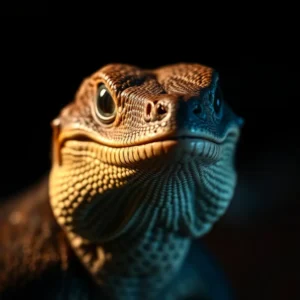
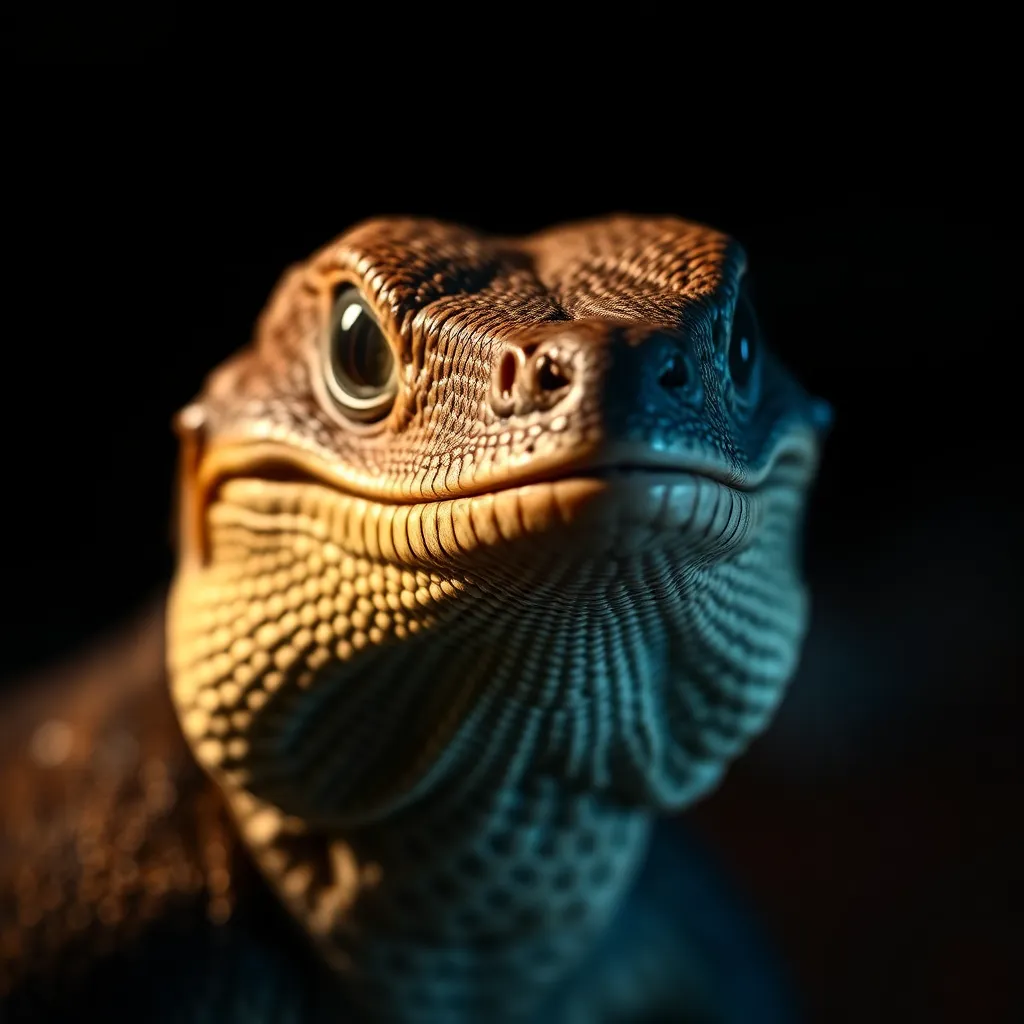
Monitor Lizard close-up
Monitor Lizard

SURVIVAL TOOLKIT

Built for Survival

Nature's engineering refined over millions of years

🔬 SURVIVAL TOOLKIT
Forked Chemosensory Tongue
01

Forked Chemosensory Tongue

A deeply forked tongue collects volatile scent molecules at two spatially separated points, transferring them to dual Jacobson's organs for precise directional scent-tracking over long distances.

High-Performance Heart
02

High-Performance Heart

A functionally four-chambered heart maintains high ventricular pressure during exertion, delivering oxygenated blood at mammalian efficiency to sustain aerobic activity far beyond other reptile capacities.

Unidirectional Lung Airflow
03

Unidirectional Lung Airflow

Internal air sacs create an almost unidirectional airflow through the lung, substantially increasing oxygen extraction per breath — a system convergent with the avian air sac mechanism.

Aquatic Efficiency
04

Aquatic Efficiency

A laterally compressed tail acts as an oar for powerful undulatory swimming, with valved nostrils and the ability to hold breath for up to 15 minutes enabling pursuit of aquatic prey.

Serrated Shearing Teeth
05

Serrated Shearing Teeth

Slightly recurved, laterally compressed teeth with serrated edges grip and shear through the tough skin of prey including crocodile eggs, large fish, and carrion.

Ancient Dragon of the River Banks. An extraordinary creature that reminds us what we stand to lose.

Jungal Safari · Wildlife Network
💡

Did You Know?

Nile monitors and their relatives have the most mammal-like cardiovascular system of any reptile — a functionally four-chambered heart that maintains higher blood pressure during activity, enabling sustained aerobic exercise.

🍖 DIET: CARNIVORE

What Does the Monitor Lizard Eat?

🥚
Crocodile & Bird Eggs
🐟
Fish & Aquatic Prey
🐸
Frogs & Small Reptiles
🐭
Rodents & Small Mammals
🥩
Carrion & Carcasses
🗺️ GEOGRAPHIC RANGE

Where Do Monitor Lizards Live?

🌍
Continents
➡️
Population Trend Stable

Conservation in Action

How You Can Help the Monitor Lizard

Small actions, taken together, can reverse the decline of species like this one

🌳
Protect Habitat

Support wildlife reserves and protected land corridors

🚫
Stop Poaching

Report illegal trade and back anti-poaching patrols

🔬
Fund Research

Camera-trap studies and population monitoring

🤝
Community Work

Partner with local herders to reduce conflict

📢
Raise Awareness

Educate and inspire future wildlife champions

"Without urgent action, the Monitor Lizard could disappear from the wild within our lifetime."

PROTECT THEM. PRESERVE THEIR LEGACY.

The Monitor Lizard's Future
Is In Our Hands

Every share, every donation, every voice raised — makes a difference for wildlife conservation.

🌳Protect Habitat
📢Raise Awareness
💰Fund Research
🤝Community Work
🚫Stop Poaching

"Protect Wildlife. Preserve Our Planet."

Every species matters. Every action counts.

Advertisement