Loading Wildlife…

Strigidae LC

THE

OWL

Silent Shadow of the Night Sky

Bubo bubo

Europe, Asia, Africa
CLASS Aves FAMILY Strigidae GENUS Bubo
64 km/h
Top Speed
⚖️
1.5–4.2 kg
Max Weight
📏
58–73 cm
Body Length
🕰️
20 years (wild)
Lifespan
🍖
Carnivore
Diet Type

IUCN Red List — Where this species stands

LC Least Concern
NT Near Threatened
VU Vulnerable
EN Endangered
CR Critical
EW Extinct Wild
EX Extinct

About the Owl

Bubo bubo

Advertisement

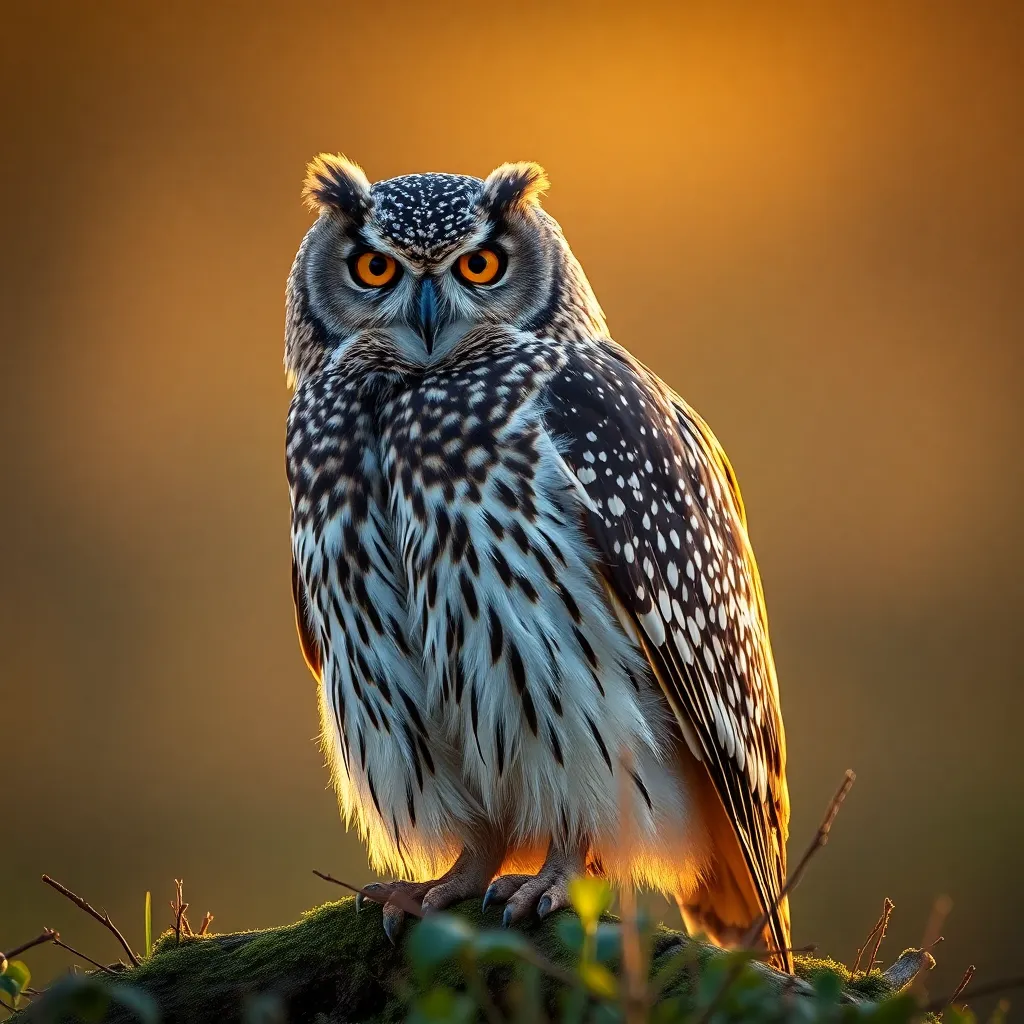
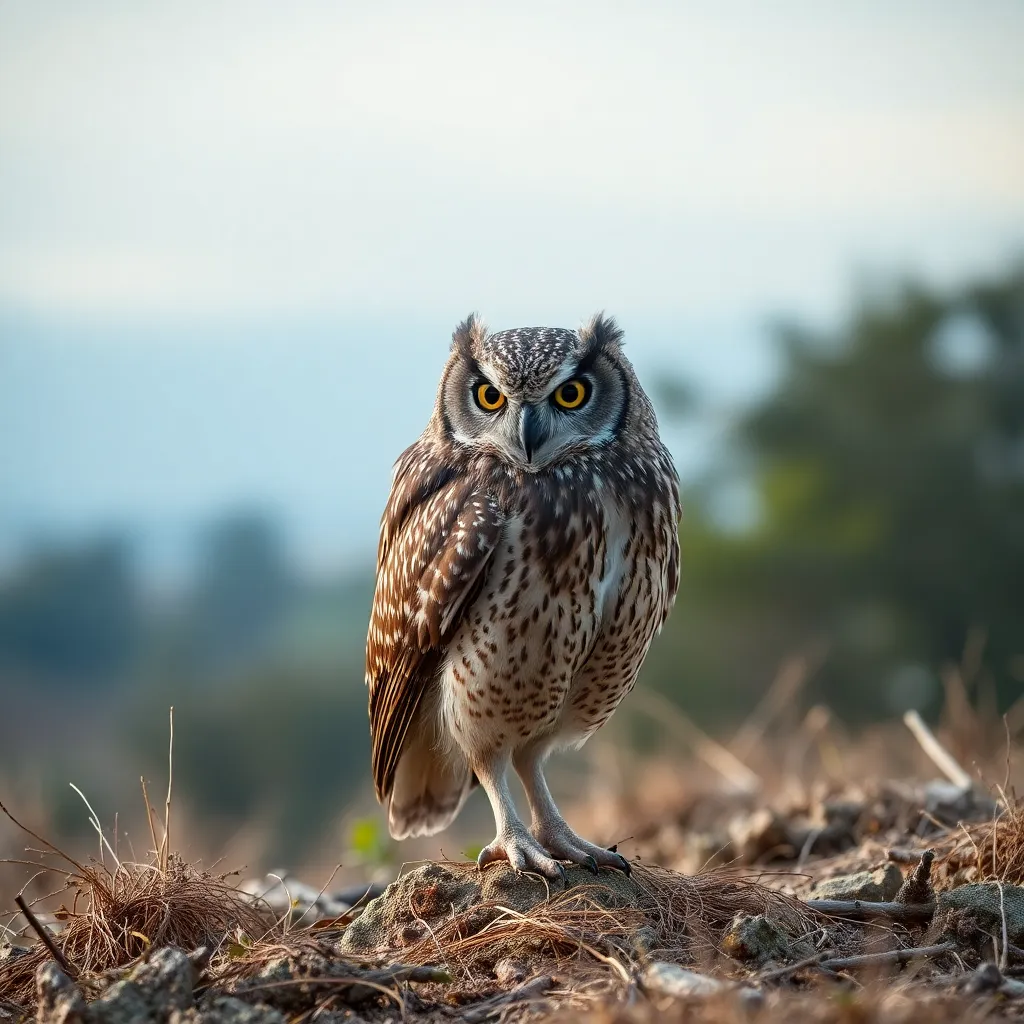
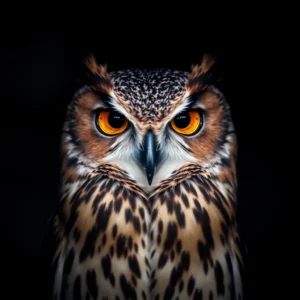
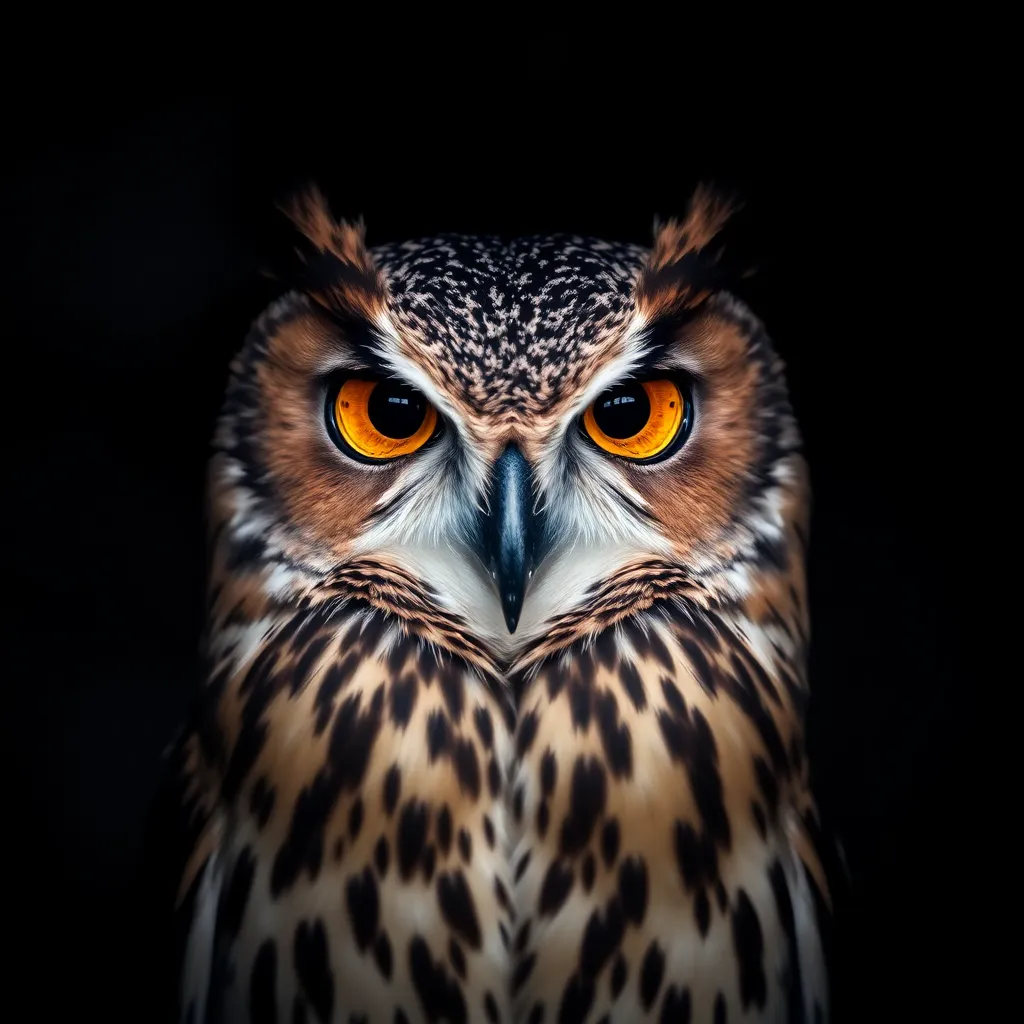
The Eurasian eagle-owl is the largest owl in the world and a supreme aerial predator, capable of hunting prey as large as deer fawns and young foxes. With a wingspan up to 1.9 metres and enormous amber eyes, it is a dramatic apex predator that occupies the top of nocturnal food chains across Europe and Asia. Eagle-owls are almost completely silent in flight — a feat achieved through a remarkable array of feather adaptations that eliminate aerodynamic noise — allowing them to approach prey with absolute stealth.

⚡ Speed Comparison

Human
12 km/h
Car (city)
50 km/h
Horse
54 km/h
Owl
64 km/h

💡 Fun Facts

01

The Eurasian eagle-owl can rotate its head 270 degrees because it cannot move its eyes — owl eyes are tubular rather than spherical and are fixed in the skull by bony sclerotic rings.

02

Owl feathers have comb-like serrations on the leading edge of flight feathers that break up turbulent airflow into micro-streams, virtually eliminating aerodynamic noise during flight.

03

An owl's ears are asymmetrically positioned — one higher than the other — allowing the brain to triangulate the exact three-dimensional position of a sound source with sub-degree precision.

04

Eagle-owls have been documented killing and eating other large raptors including goshawks, peregrines, and even small golden eagles, making them apex predators of birds of prey.

05

The facial disc of an owl functions as a parabolic sound collector — it can be adjusted by facial muscles to focus sound waves precisely on the ears, a mechanism analogous to cupping hands behind one's ears.

Unlock Expert Wildlife Facts

Watch a short 15-second video to unlock detailed expert analysis, exclusive wildlife photography, and rare behavioral facts.

📍 Where to Find This Animal

🛒 Owl Related Gear

As an Amazon Associate we earn from qualifying purchases.
🗨️

Join the Conversation

Share your thoughts about the Owl

✍️

Leave a Comment

Your email address will not be published. Required fields are marked *

How Big Is a Owl?

Side-by-side comparison with an adult human (175 cm)

🧍
Human
175 cm
🦉
Owl
65 cm
shoulder height
1.5–4.2 BODY WEIGHT
58–73 BODY LENGTH
64 TOP SPEED
20 LIFESPAN
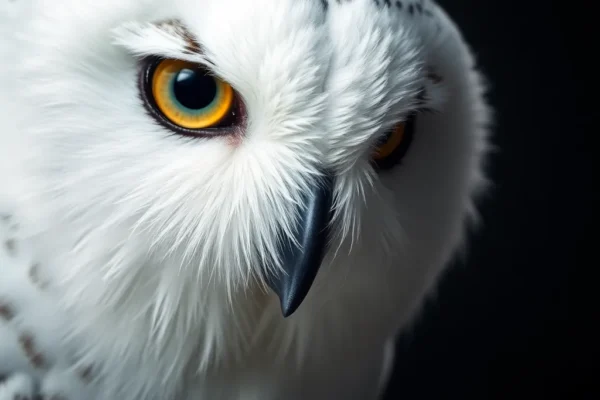
Owl close-up
Owl

SURVIVAL TOOLKIT

Built for Survival

Nature's engineering refined over millions of years

🔬 SURVIVAL TOOLKIT
Asymmetric Ear Placement
01

Asymmetric Ear Placement

Offset ear positions create inter-aural time and intensity differences that the brain processes into precise vertical and horizontal sound localization, enabling strikes in complete darkness.

Silent Flight Feathers
02

Silent Flight Feathers

Serrated leading-edge feathers, velvety surface structures, and fringe trailing edges collectively eliminate aerodynamic sound across all flight frequencies prey can detect.

Tubular Low-Light Eyes
03

Tubular Low-Light Eyes

Elongated, tube-shaped eyes packed with rod photoreceptors maximize light collection at low luminance, providing vision sensitivity 35–100 times greater than human eyes in darkness.

Flexible Neck Rotation
04

Flexible Neck Rotation

Fourteen neck vertebrae (double the human count), duplicated vertebral arteries, and blood pooling systems allow 270-degree head rotation without compromising blood flow to the brain.

Talons as Sensors
05

Talons as Sensors

Powerful, curved talons are covered in pressure-sensitive papillae that detect prey movement and transmit force data to the nervous system, ensuring a killing grip on contact.

Silent Shadow of the Night Sky. An extraordinary creature that reminds us what we stand to lose.

Jungal Safari · Wildlife Network
💡

Did You Know?

The Eurasian eagle-owl can rotate its head 270 degrees because it cannot move its eyes — owl eyes are tubular rather than spherical and are fixed in the skull by bony sclerotic rings.

🍖 DIET: CARNIVORE

What Does the Owl Eat?

🐭
Rodents & Rabbits
🦔
Hedgehogs & Small Mammals
🦆
Birds (up to heron-sized)
🦎
Reptiles & Amphibians
🦀
Crayfish & Insects
🗺️ GEOGRAPHIC RANGE

Where Do Owls Live?

🌍
➡️
Population Trend Stable

Conservation in Action

How You Can Help the Owl

Small actions, taken together, can reverse the decline of species like this one

🌳
Protect Habitat

Support wildlife reserves and protected land corridors

🚫
Stop Poaching

Report illegal trade and back anti-poaching patrols

🔬
Fund Research

Camera-trap studies and population monitoring

🤝
Community Work

Partner with local herders to reduce conflict

📢
Raise Awareness

Educate and inspire future wildlife champions

"Without urgent action, the Owl could disappear from the wild within our lifetime."

PROTECT THEM. PRESERVE THEIR LEGACY.

The Owl's Future
Is In Our Hands

Every share, every donation, every voice raised — makes a difference for wildlife conservation.

🌳Protect Habitat
📢Raise Awareness
💰Fund Research
🤝Community Work
🚫Stop Poaching

"Protect Wildlife. Preserve Our Planet."

Every species matters. Every action counts.

Advertisement