Loading Wildlife…

Physaliidae LC

THE

PORTUGUESE MAN O’ WAR

Drifting Fleet of Deadly Stingers

Physalia physalis

Global
CLASS Hydrozoa FAMILY Physaliidae GENUS Physalia
Drift-dependent km/h
Top Speed
⚖️
Up to 100 g kg
Max Weight
📏
Tentacles up to 50 m
Body Length
🕰️
1 year
Lifespan
🍖
Carnivore
Diet Type

IUCN Red List — Where this species stands

LC Least Concern
NT Near Threatened
VU Vulnerable
EN Endangered
CR Critical
EW Extinct Wild
EX Extinct

About the Portuguese Man O’ War

Physalia physalis

Advertisement

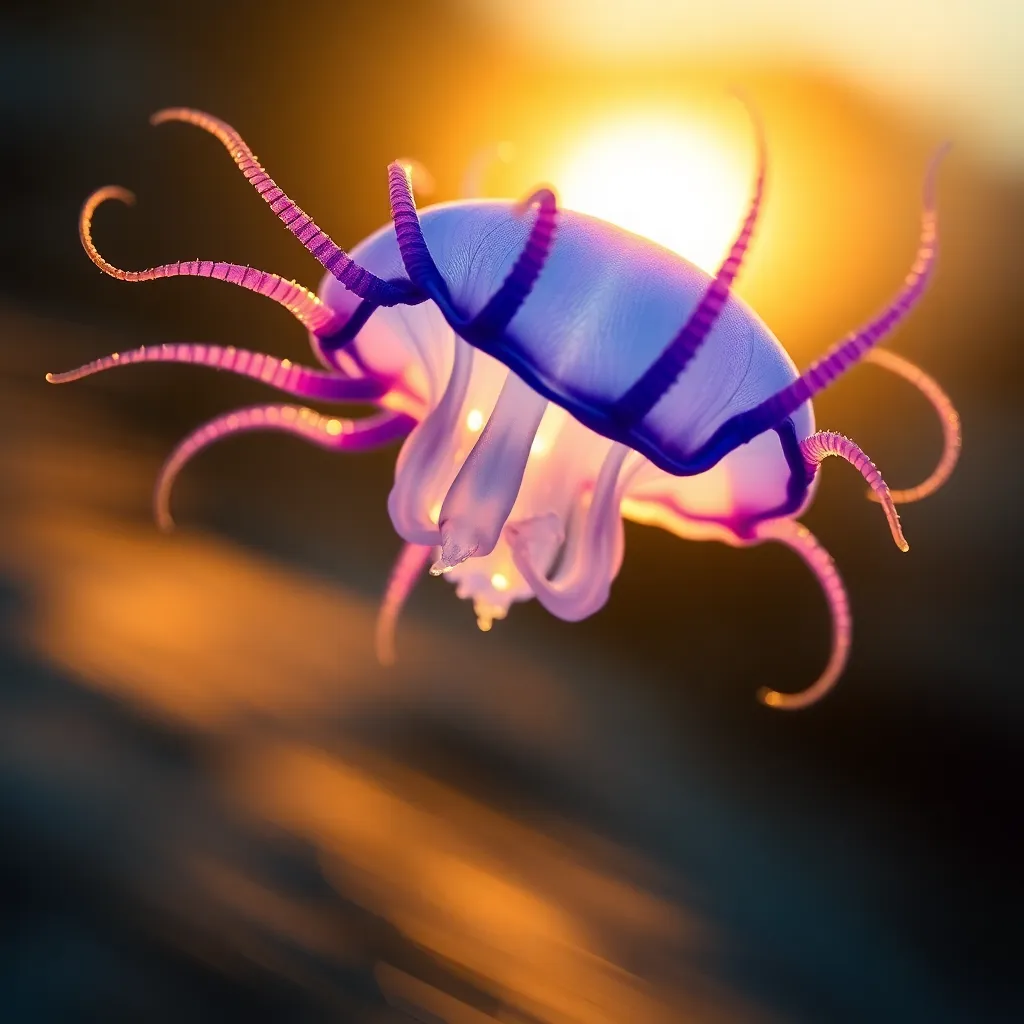
The Portuguese man o’ war is not a single organism but a siphonophore — a colonial superorganism composed of four distinct types of genetically identical zooids, each specialized for a different function such as floating, feeding, reproduction, or defense. Its vivid blue-pink gas-filled float, called a pneumatophore, sails above the surface while venomous tentacles up to 50 meters long trail below to ensnare prey. It is found in warm tropical and subtropical oceans worldwide, often washing ashore in mass strandings following storms.

⚡ Speed Comparison

Portuguese Man O’ War
0 km/h
Human
12 km/h
Car (city)
50 km/h
Horse
54 km/h

💡 Fun Facts

01

The Portuguese man o' war is not a jellyfish — it is a colonial siphonophore composed of four types of specialized polyps that function as a single coordinated organism.

02

Its tentacles can remain venomous and capable of stinging for hours after being severed from the colony and even after the float has died.

03

The gas inside the pneumatophore float is approximately 90% nitrogen, compared to 78% in air, providing precise buoyancy control.

04

The loggerhead sea turtle is immune to man o' war venom and actively seeks them out as prey, eating entire colonies including the toxic tentacles.

05

Man o' war colonies have no means of self-propulsion — they travel entirely by wind acting on the float and ocean currents, making their distribution entirely meteorological.

Unlock Expert Wildlife Facts

Watch a short 15-second video to unlock detailed expert analysis, exclusive wildlife photography, and rare behavioral facts.

📍 Where to Find This Animal

Habitat Types: Open Tropical Ocean

🛒 Portuguese Man O’ War Related Gear

As an Amazon Associate we earn from qualifying purchases.
🗨️

Join the Conversation

Share your thoughts about the Portuguese Man O’ War

✍️

Leave a Comment

Your email address will not be published. Required fields are marked *

How Big Is a Portuguese Man O’ War?

Side-by-side comparison with an adult human (175 cm)

🧍
Human
175 cm
🐾
Portuguese Man O’ War
65 cm
shoulder height
BODY WEIGHT
BODY LENGTH
Drift-dependent TOP SPEED
1 LIFESPAN
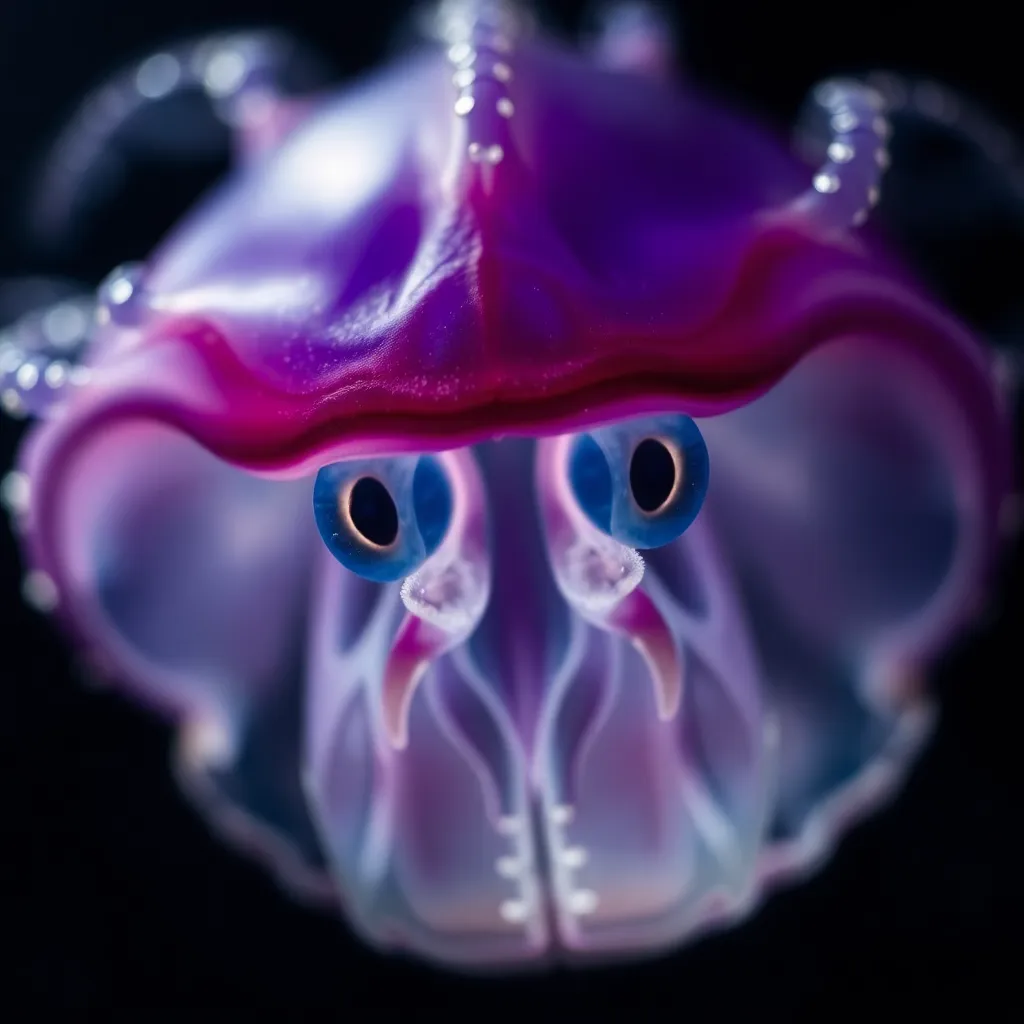
Portuguese Man O’ War close-up
Portuguese Man O’ War

SURVIVAL TOOLKIT

Built for Survival

Nature's engineering refined over millions of years

🔬 SURVIVAL TOOLKIT
Pneumatophore Sail
01

Pneumatophore Sail

A gas-filled float extends 15 cm above water and acts as a sail, harnessing wind to travel vast ocean distances without any muscular effort.

Cascading Nematocysts
02

Cascading Nematocysts

Hundreds of thousands of stinging cells along tentacles fire on contact, injecting venom that paralyzes fish even larger than the colony.

UV-Protective Pigment
03

UV-Protective Pigment

Vivid blue-purple chromoproteins in the float absorb harmful UV radiation at the ocean surface, protecting living tissues.

Colonial Division of Labor
04

Colonial Division of Labor

Four specialized zooid types handle float, hunting, digestion, and reproduction respectively, achieving efficiency impossible for a single organism.

Persistent Venom
05

Persistent Venom

Tentacles retain full stinging capacity for hours after separation, creating a passive minefield drifting behind the main colony.

Drifting Fleet of Deadly Stingers. An extraordinary creature that reminds us what we stand to lose.

Jungal Safari · Wildlife Network
💡

Did You Know?

The Portuguese man o' war is not a jellyfish — it is a colonial siphonophore composed of four types of specialized polyps that function as a single coordinated organism.

🍖 DIET: CARNIVORE

What Does the Portuguese Man O’ War Eat?

🐟
Small Fish
🦐
Shrimp & Krill
🌊
Zooplankton
🦑
Small Squid
🗺️ GEOGRAPHIC RANGE

Where Do Portuguese Man O’ Wars Live?

🌍
Continents
➡️
Population Trend Unknown

Conservation in Action

How You Can Help the Portuguese Man O’ War

Small actions, taken together, can reverse the decline of species like this one

🌳
Protect Habitat

Support wildlife reserves and protected land corridors

🚫
Stop Poaching

Report illegal trade and back anti-poaching patrols

🔬
Fund Research

Camera-trap studies and population monitoring

🤝
Community Work

Partner with local herders to reduce conflict

📢
Raise Awareness

Educate and inspire future wildlife champions

"Without urgent action, the Portuguese Man O’ War could disappear from the wild within our lifetime."

PROTECT THEM. PRESERVE THEIR LEGACY.

The Portuguese Man O’ War's Future
Is In Our Hands

Every share, every donation, every voice raised — makes a difference for wildlife conservation.

🌳Protect Habitat
📢Raise Awareness
💰Fund Research
🤝Community Work
🚫Stop Poaching

"Protect Wildlife. Preserve Our Planet."

Every species matters. Every action counts.

Advertisement