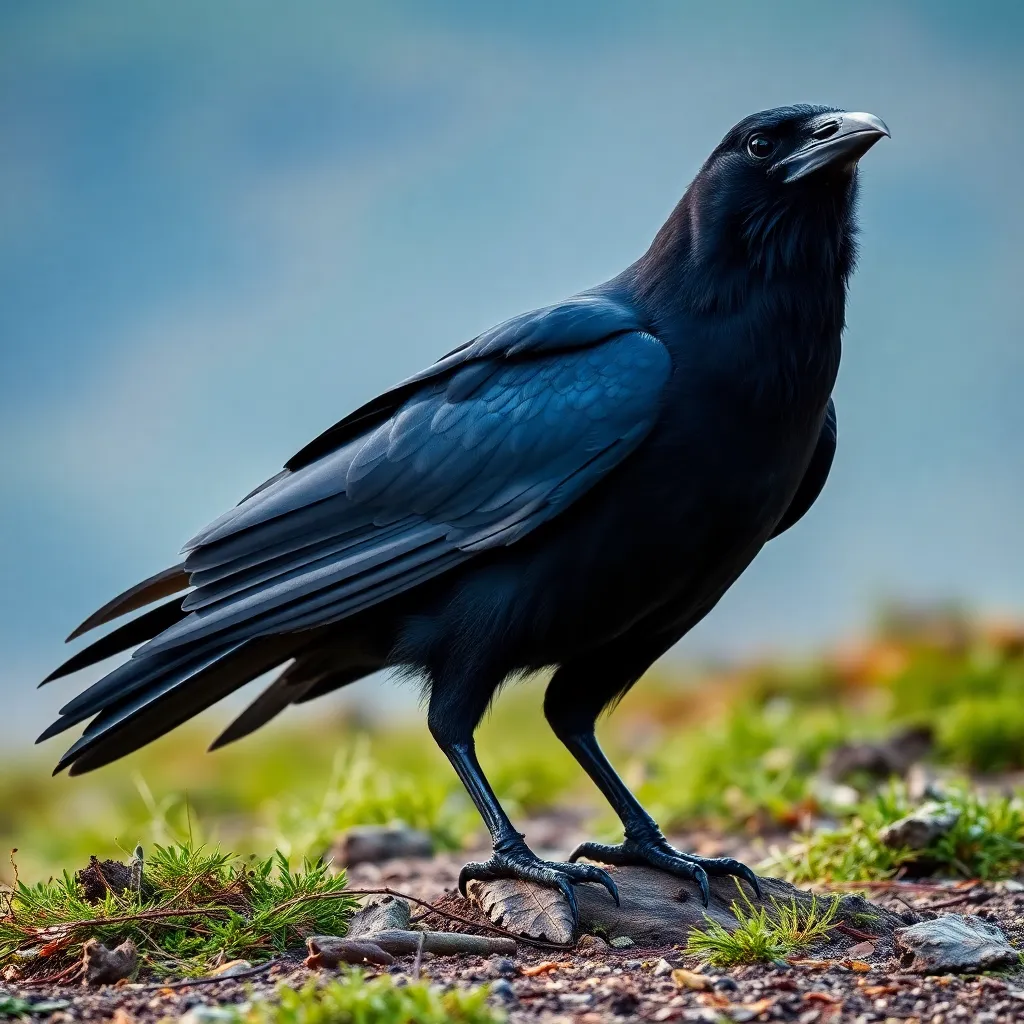
The common raven is the world’s largest passerine and one of the most cognitively sophisticated animals on the planet. Ravens have demonstrated tool use, future planning, social deception, and theory of mind — cognitive abilities once thought exclusive to great apes. They inhabit the widest range of habitats of any naturally occurring land bird, from Arctic tundra and high mountain peaks to deserts and coastal cliffs, thriving wherever food can be found.
About the Raven
Corvus corax
Advertisement
⚡ Speed Comparison
📸 Photo Gallery




💡 Fun Facts
01
Ravens have been documented hiding food from potential thieves, then re-hiding it if they think they were watched — demonstrating a theory of mind and future planning.
02
Young ravens form non-breeding flocks that cooperate to find and advertise large carcasses, calling in other ravens to overwhelm dominant wolves at kills before stealing shares.
03
Ravens engage in prolonged aerial play, performing barrel rolls, flying upside down, and dropping objects mid-flight only to catch them again.
04
The Tower of London ravens are so important to British mythology that a Royal Decree states the Tower will fall if their six resident ravens ever leave.
05
Ravens can mimic the calls of other animals, human speech, and even mechanical sounds; wild ravens have been recorded mimicking wolf howls to attract wolves to prey they cannot open themselves.
📍 Where to Find This Animal
Habitat Types:
Boreal Forest, Mountains & Tundra
🛒 Raven Related Gear
As an Amazon Associate we earn from qualifying purchases.




Join the Conversation
Share your thoughts about the Raven