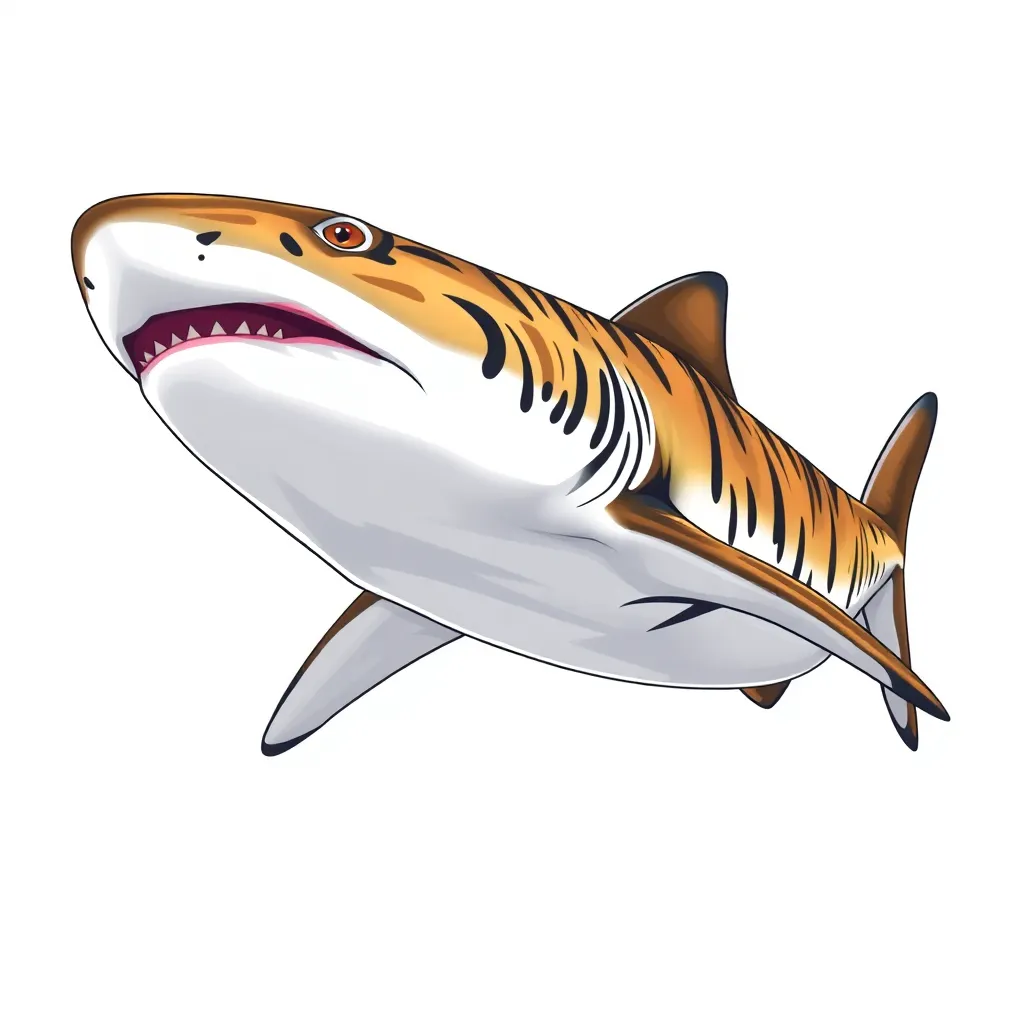
The tiger shark is the ocean’s great generalist predator, second only to the great white in documented attacks on humans but far more ecologically wide-ranging. Its distinctive striped juvenile pattern, highly serrated teeth, and exceptional olfactory system make it one of the most effective predators in tropical marine ecosystems. Unlike most sharks, tiger sharks are ovoviviparous, giving birth to live litters of up to 80 pups, which contributes to their population resilience.
About the Tiger Shark
Galeocerdo cuvier
Advertisement
⚡ Speed Comparison
📸 Photo Gallery




💡 Fun Facts
01
Tiger sharks have the most diverse diet of any shark — their stomachs have contained license plates, tires, a chicken coop, and a bag of potatoes alongside normal prey.
02
They possess a unique valve called a spiracle behind the eye that pumps water directly over the gills, allowing them to breathe while lying still on the seafloor.
03
Tiger sharks are highly migratory, tracked traveling over 7,500 km between Hawaiian islands and the US West Coast.
04
Their teeth have a unique curved, serrated shape unlike any other shark, designed specifically to saw through turtle shells and bone.
05
Tiger sharks play a critical ecological role as ecosystem engineers — their predation pressure on sea turtles forces turtles to avoid overgrazing seagrass beds.
📍 Where to Find This Animal
Habitat Types:
Tropical & Subtropical Oceans
🛒 Tiger Shark Related Gear
As an Amazon Associate we earn from qualifying purchases.







Join the Conversation
Share your thoughts about the Tiger Shark