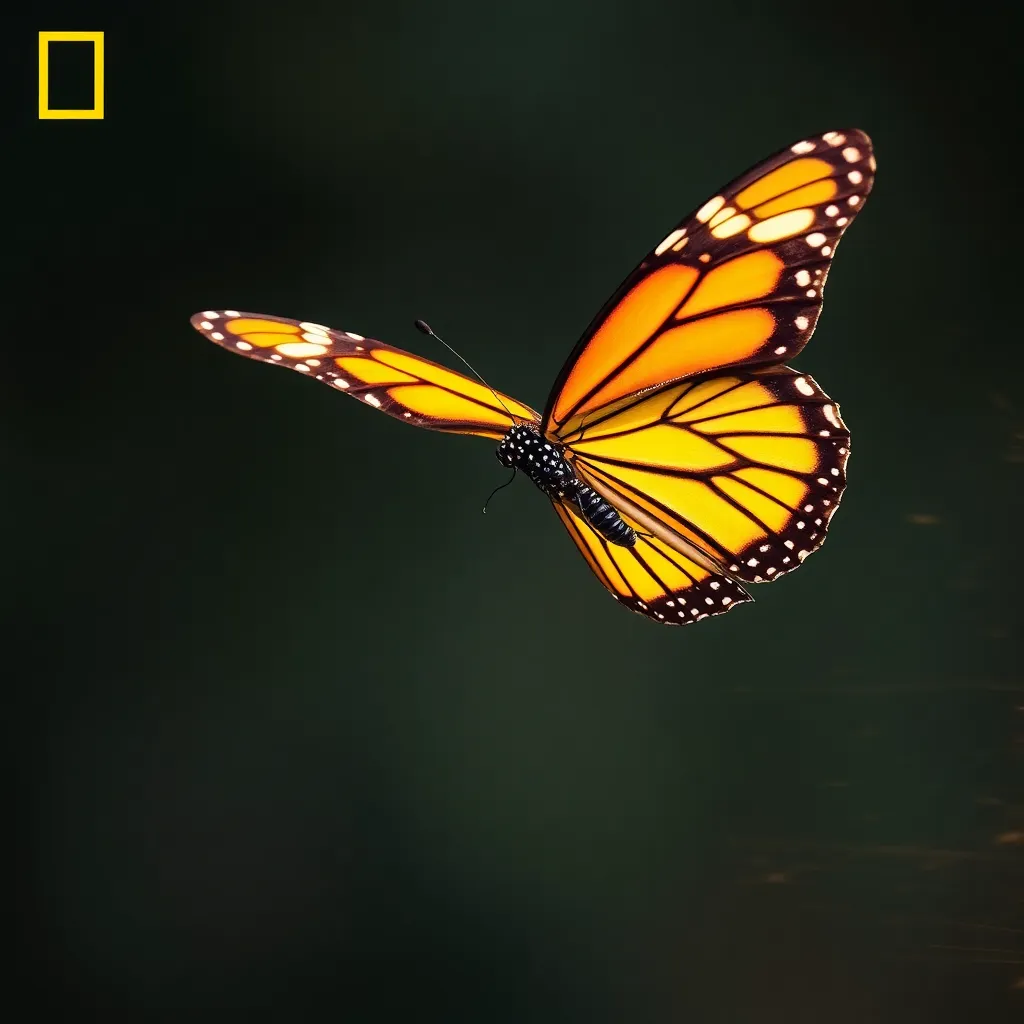
The monarch butterfly undertakes one of the most extraordinary migrations in the animal kingdom, travelling up to 4,500 km from Canada and the United States to overwintering forests in central Mexico — navigated entirely by a sun compass calibrated to an internal circadian clock. They are the only butterfly known to make such a two-way transgenerational migration, with the journey south taken by a single ‘super-generation’ that lives eight times longer than summer generations. Their vivid orange wings advertise the cardiac glycosides sequestered from milkweed, warning predators of their toxicity.
About the Butterfly
Danaus plexippus
Advertisement
⚡ Speed Comparison
📸 Photo Gallery




💡 Fun Facts
01
Monarch butterflies navigate using a sun compass in their antennae that integrates the time of day with the sun's position — a built-in GPS that guides them to a specific mountain forest they have never visited.
02
The overwintering sites in Mexico are so dense that tree branches break under the weight of millions of butterflies; temperatures in these clustered masses are several degrees warmer than the air.
03
Monarchs taste with their feet — chemoreceptors on their tarsi can detect the glycoside chemistry of milkweed plants as soon as they land, assessing suitability for egg-laying.
04
The 'super-generation' that migrates south lives approximately eight months compared to the two-to-six-week lifespan of summer generations, triggered by shortened day length and temperature drops.
05
Monarch populations have declined by 90% over the past 20 years, primarily due to loss of milkweed (the sole larval food plant) from herbicide use in agriculture.
📍 Where to Find This Animal
Habitat Types:
Temperate Grasslands
🛒 Butterfly Related Gear
As an Amazon Associate we earn from qualifying purchases.






Join the Conversation
Share your thoughts about the Butterfly