Loading Wildlife…

Nymphalidae EN

THE

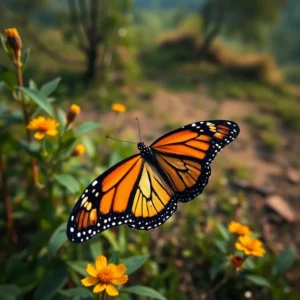
MONARCH BUTTERFLY

Winged Pilgrim of Two Continents

Danaus plexippus

Americas
CLASS Insecta FAMILY Nymphalidae GENUS Danaus
35 km/h
Top Speed
⚖️
0.27-0.75 g kg
Max Weight
📏
8.5-10 cm wingspan
Body Length
🕰️
2-6 weeks (summer); 6-8 months (migratory) yrs
Lifespan
🍖
Nectarivore
Diet Type

IUCN Red List — Where this species stands

LC Least Concern
NT Near Threatened
VU Vulnerable
EN Endangered
CR Critical
EW Extinct Wild
EX Extinct

About the Monarch Butterfly

Danaus plexippus

Advertisement

The monarch butterfly undertakes one of the most remarkable animal migrations on Earth — a multi-generational journey of up to 5,000 kilometres between breeding grounds in Canada and overwintering forests in central Mexico. No individual butterfly completes the full round trip; it takes 3-4 summer generations to migrate north and a single ‘super-generation’ of longer-lived individuals to make the return journey south. Critically, monarchs that have never been to Mexico navigate there with perfect precision, guided by an internal sun compass and magnetic sensors.

⚡ Speed Comparison

Human
12 km/h
Monarch Butterfly
35 km/h
Car (city)
50 km/h
Horse
54 km/h

💡 Fun Facts

01

No individual monarch butterfly completes the full migration cycle — it takes 3-4 generations to travel north in spring and a single 'super-generation' to fly south.

02

Monarch caterpillars sequester toxic cardiac glycosides from milkweed plants and retain them as adults, making them toxic to most bird predators.

03

Their wings contain light-sensitive cryptochrome proteins that function as a magnetic compass, supplementing their sun-based navigation.

04

The overwintering colonies in Oyamel fir forests in Mexico can contain up to 300 million butterflies per hectare.

05

The Mexican overwintering sites were unknown to scientists until 1975 — local Indigenous communities had kept the location secret for generations.

Unlock Expert Wildlife Facts

Watch a short 15-second video to unlock detailed expert analysis, exclusive wildlife photography, and rare behavioral facts.

📍 Where to Find This Animal

🛒 Monarch Butterfly Related Gear

As an Amazon Associate we earn from qualifying purchases.
🗨️

Join the Conversation

Share your thoughts about the Monarch Butterfly

✍️

Leave a Comment

Your email address will not be published. Required fields are marked *

How Big Is a Monarch Butterfly?

Side-by-side comparison with an adult human (175 cm)

🧍
Human
175 cm
🦋
Monarch Butterfly
65 cm
shoulder height
0.27-0.75 BODY WEIGHT
8.5-10 BODY LENGTH
35 TOP SPEED
2-6 LIFESPAN
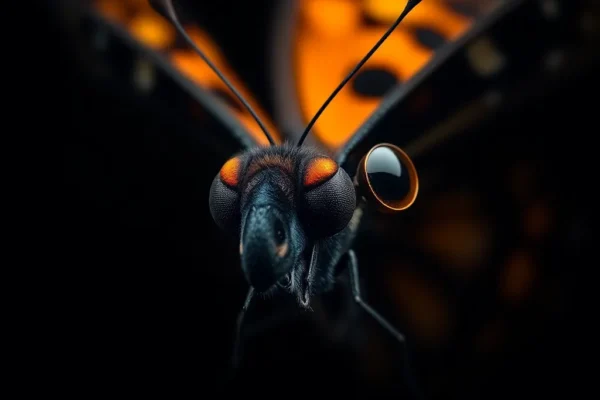
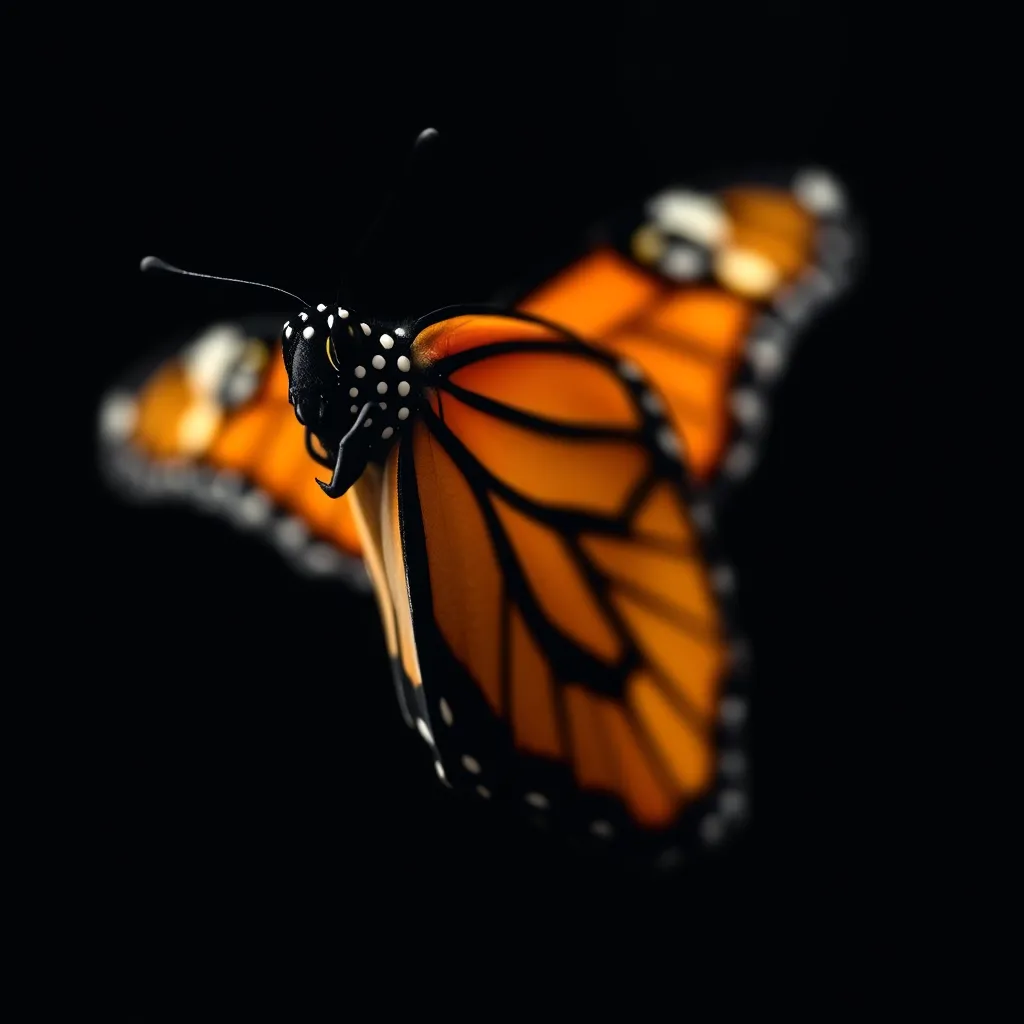
Monarch Butterfly close-up
Monarch Butterfly

SURVIVAL TOOLKIT

Built for Survival

Nature's engineering refined over millions of years

🔬 SURVIVAL TOOLKIT
Time-Compensated Sun Compass
01

Time-Compensated Sun Compass

Circadian clocks in the antennae calibrate an internal sun compass throughout the day, allowing precise southwesterly navigation even as the sun's position shifts across the sky.

Chemical Toxicity
02

Chemical Toxicity

Cardiac glycosides absorbed from milkweed during caterpillar stage are sequestered in adult tissues, causing vomiting in bird predators and establishing the orange-black pattern as a learned warning signal.

Overwintering Dormancy
03

Overwintering Dormancy

The migratory super-generation enters reproductive diapause triggered by shortening autumn days, suppressing breeding and redirecting energy reserves toward the 5,000-km flight to Mexico.

Thermal Soaring
04

Thermal Soaring

Monarchs exploit thermal updrafts and favorable tail winds to reduce energy expenditure during migration, gliding when possible and flapping minimally to conserve fat reserves.

Magnetic Navigation
05

Magnetic Navigation

Cryptochrome proteins in the eyes and antennae detect Earth's magnetic field intensity and inclination angle, providing a backup navigation system for cloudy days when the sun compass fails.

Aposematic Coloration
06

Aposematic Coloration

Vivid orange and black wing patterns are a classic aposematic warning to predators that have previously experienced the vomiting caused by the butterfly's cardiac glycoside toxins.

Winged Pilgrim of Two Continents. An extraordinary creature that reminds us what we stand to lose.

Jungal Safari · Wildlife Network
💡

Did You Know?

No individual monarch butterfly completes the full migration cycle — it takes 3-4 generations to travel north in spring and a single 'super-generation' to fly south.

🍖 DIET: NECTARIVORE

What Does the Monarch Butterfly Eat?

🌸
Flower Nectar
🌼
Milkweed Nectar
🌻
Goldenrod
💧
Water & Minerals
🗺️ GEOGRAPHIC RANGE

Where Do Monarch Butterflys Live?

🌍
Continents
📉
Population Trend Declining

Conservation in Action

How You Can Help the Monarch Butterfly

Small actions, taken together, can reverse the decline of species like this one

🌳
Protect Habitat

Support wildlife reserves and protected land corridors

🚫
Stop Poaching

Report illegal trade and back anti-poaching patrols

🔬
Fund Research

Camera-trap studies and population monitoring

🤝
Community Work

Partner with local herders to reduce conflict

📢
Raise Awareness

Educate and inspire future wildlife champions

"Without urgent action, the Monarch Butterfly could disappear from the wild within our lifetime."

PROTECT THEM. PRESERVE THEIR LEGACY.

The Monarch Butterfly's Future
Is In Our Hands

Every share, every donation, every voice raised — makes a difference for wildlife conservation.

🌳Protect Habitat
📢Raise Awareness
💰Fund Research
🤝Community Work
🚫Stop Poaching

"Protect Wildlife. Preserve Our Planet."

Every species matters. Every action counts.

Advertisement