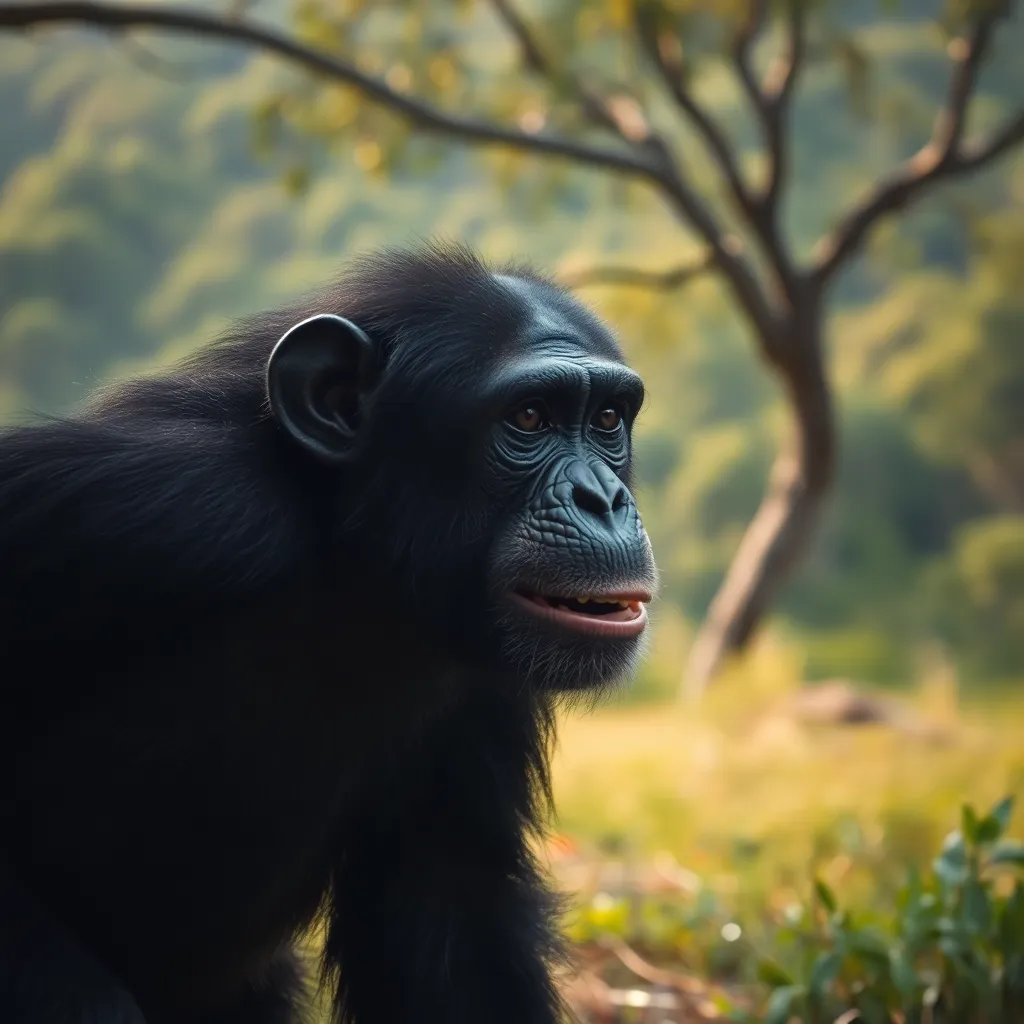
The common chimpanzee shares approximately 98.7% of its DNA with humans and exhibits a richness of cognitive, social, and cultural behaviors that continues to redefine our understanding of what separates us from other animals. Chimpanzees manufacture and use a variety of tools — including stone hammers for cracking nuts, leaf sponges for collecting water, and sharpened sticks for spear-hunting bushbabies — with techniques passed culturally from mother to offspring across generations. Their complex social hierarchies, coalition politics, and documented capacity for empathy, deception, and grief make them among the most behaviorally sophisticated animals on Earth.
About the Chimpanzee
Pan troglodytes
Advertisement
⚡ Speed Comparison
📸 Photo Gallery




💡 Fun Facts
01
Chimpanzees have been documented making and using over 26 distinct tool types across different populations — each population has its own unique technological 'culture' not shared by others.
02
Chimps pass a mirror self-recognition test reliably from age 8, demonstrating a concept of self shared otherwise only by humans, great apes, elephants, dolphins, and magpies.
03
A chimpanzee's short-term memory for numbers displayed briefly on a screen is demonstrably faster and more accurate than adult humans in controlled laboratory tests.
04
Chimpanzees engage in organized coalitional warfare between communities — border patrols, ambushes, and lethal raids with tactical coordination that has no parallel in non-human animals.
05
Jane Goodall's 1960 observation of chimpanzees using grass stems as tools to extract termites was the first documented non-human tool use, forcing a redefinition of what it means to be human.
📍 Where to Find This Animal
Habitat Types:
Tropical Rainforest, Savanna Woodland
🛒 Chimpanzee Related Gear
As an Amazon Associate we earn from qualifying purchases.





Join the Conversation
Share your thoughts about the Chimpanzee