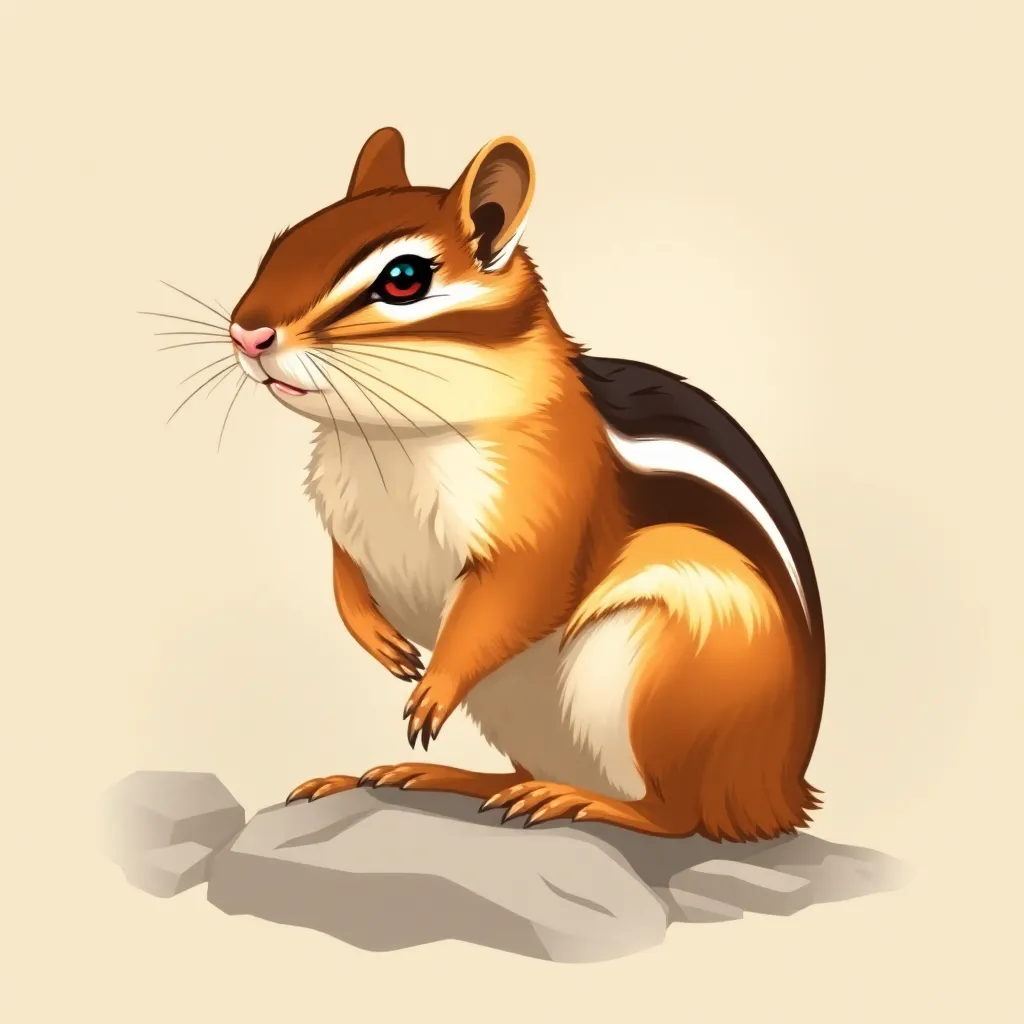
The eastern chipmunk is a small, boldly striped ground squirrel of North American deciduous forests, celebrated for its industry and memory in gathering and caching food. Each chipmunk maintains an elaborate underground burrow system with separate chambers for sleeping, waste, and food storage — a larder that may contain up to 8 liters of seeds by autumn. Unlike true hibernators, chipmunks enter a state of torpor during winter and wake periodically to eat from their caches rather than relying solely on body fat.
About the Chipmunk
Tamias striatus
Advertisement
⚡ Speed Comparison
📸 Photo Gallery




💡 Fun Facts
01
Eastern chipmunks can carry up to 9 acorns at once in their cheek pouches — internal pouches that extend back to the shoulders and can stretch to three times the size of the chipmunk's head.
02
Each chipmunk excavates a burrow system up to 3.5 meters long with separate chambers for sleeping, food storage, and waste — a level of sanitation engineering unusual in rodents.
03
They are not true hibernators but enter periodic torpor; their heart rate drops from 350 to as low as 4 beats per minute during deep torpor phases.
04
Chipmunks have been observed vocalizing specific alarm calls for aerial predators versus ground predators — a rudimentary referential communication system.
05
Chipmunks play an important ecological role as accidental tree planters; they cache far more acorns than they can retrieve, and the forgotten ones germinate.
📍 Where to Find This Animal
Habitat Types:
Deciduous Forest & Forest Edge
🛒 Chipmunk Related Gear
As an Amazon Associate we earn from qualifying purchases.








Join the Conversation
Share your thoughts about the Chipmunk