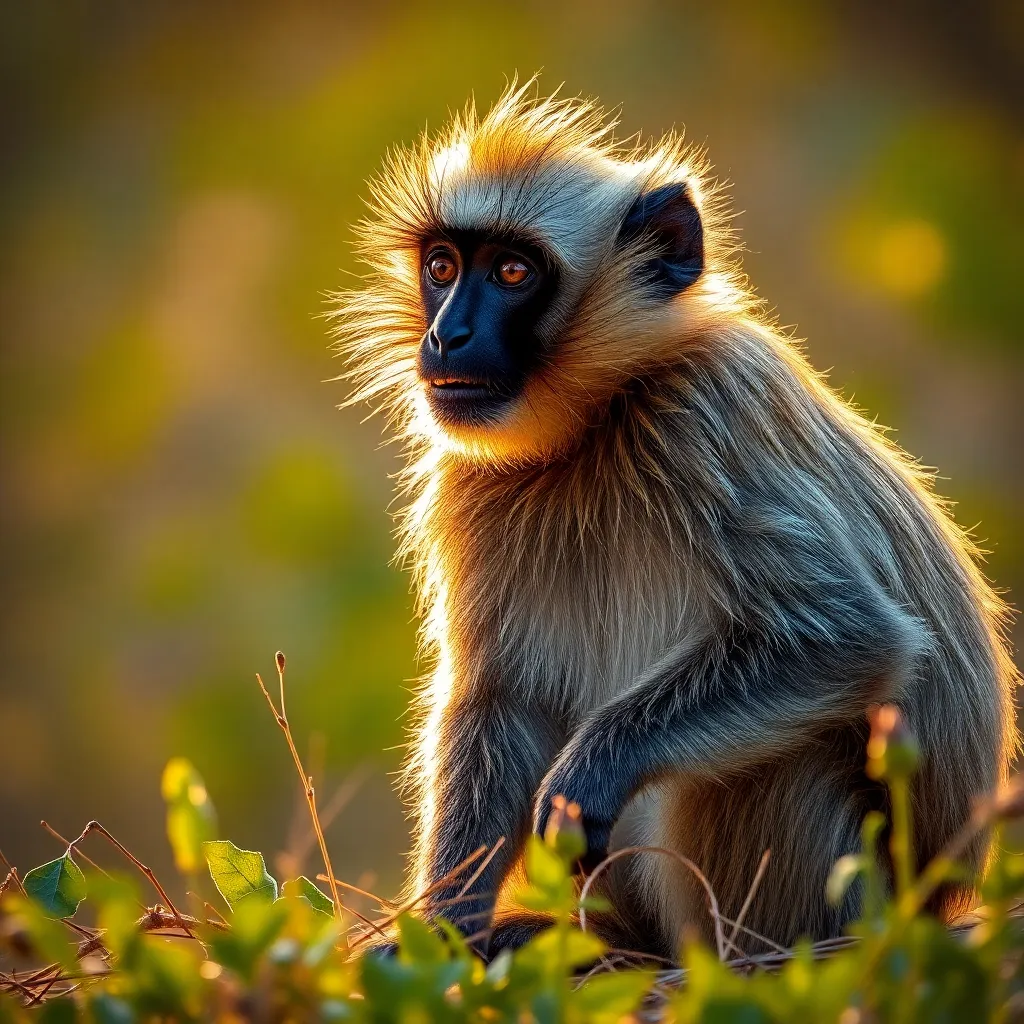
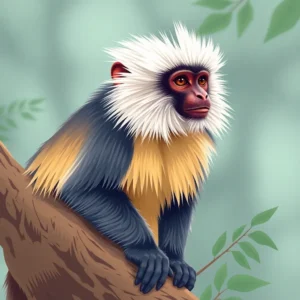
The Hanuman langur, or grey langur, is one of the most widespread and ecologically successful primates of the Indian subcontinent, equally at home in dense forest, agricultural land, and bustling city temples. Sacred to Hindus as the earthly representative of the monkey-god Hanuman, they are often fed and tolerated in close proximity to humans. Their specialised multi-chambered stomach — analogous to that of ruminants — allows digestion of mature leaves, unripe fruit, and other cellulose-rich plant matter inedible to most primates.
About the Langur
Semnopithecus entellus
Advertisement
⚡ Speed Comparison
📸 Photo Gallery



💡 Fun Facts
01
Langurs have a multi-chambered stomach with specialised bacteria that break down cellulose and neutralise plant toxins.
02
Infanticide by incoming males is well-documented in langur troops, prompting females to mate with multiple males as a counter-strategy.
03
They are worshipped as manifestations of the Hindu god Hanuman and are fed daily at temples across India.
04
Langur alarm calls are used by chital deer as an early warning system for tigers and leopards in shared habitats.
05
A single troop may range over 6-20 km² and can include up to 130 individuals led by a single dominant male.
📍 Where to Find This Animal
Habitat Types:
Forest & Urban Areas
🛒 Langur Related Gear
As an Amazon Associate we earn from qualifying purchases.





Join the Conversation
Share your thoughts about the Langur