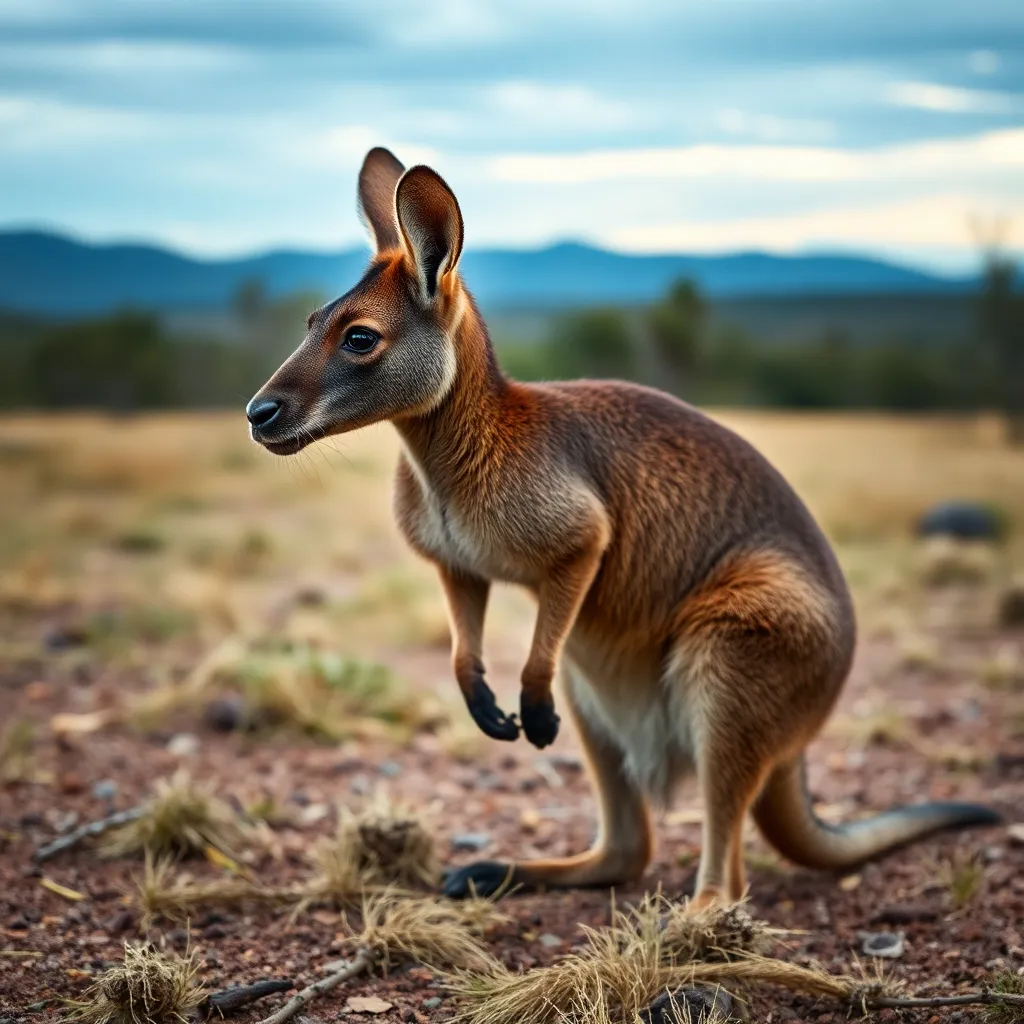
The agile wallaby is the most common wallaby in northern Australia and southern New Guinea, inhabiting open grasslands, river flats, and forest edges. Like kangaroos, wallabies are marsupials that raise tiny, undeveloped young in an external pouch. The agile wallaby is highly social, often gathering in ‘mobs’ of up to 10 individuals. Despite their smaller size compared to kangaroos, wallabies are remarkably fast and agile, using dense scrub for cover when pursued by dingoes or eagles.
About the Wallaby
Macropus agilis
Advertisement
⚡ Speed Comparison
📸 Photo Gallery




💡 Fun Facts
01
Wallabies practice embryonic diapause — they can pause a fertilised embryo in development until the existing joey leaves the pouch, ensuring nearly continuous reproduction.
02
Unlike kangaroos, some wallaby species in cold mountainous regions allow their body temperature to drop significantly in winter to conserve energy.
03
The hindfoot of a wallaby is proportionally larger relative to body size than a kangaroo's, giving greater manoeuvrability at speed in dense scrub.
04
Wallabies communicate with a range of vocalisations, foot thumps, and tail positions; thumping functions as an alarm signal audible to the entire mob.
05
Female wallabies can produce two different types of milk simultaneously — one for a joey inside the pouch and one for an older joey still occasionally suckling outside.
📍 Where to Find This Animal
Habitat Types:
Tropical Savanna
🛒 Wallaby Related Gear
As an Amazon Associate we earn from qualifying purchases.







Join the Conversation
Share your thoughts about the Wallaby